Why Adaptability Has Become One of the Most Important Features of Educational Design
The modern classroom looks very different than it did twenty years ago.
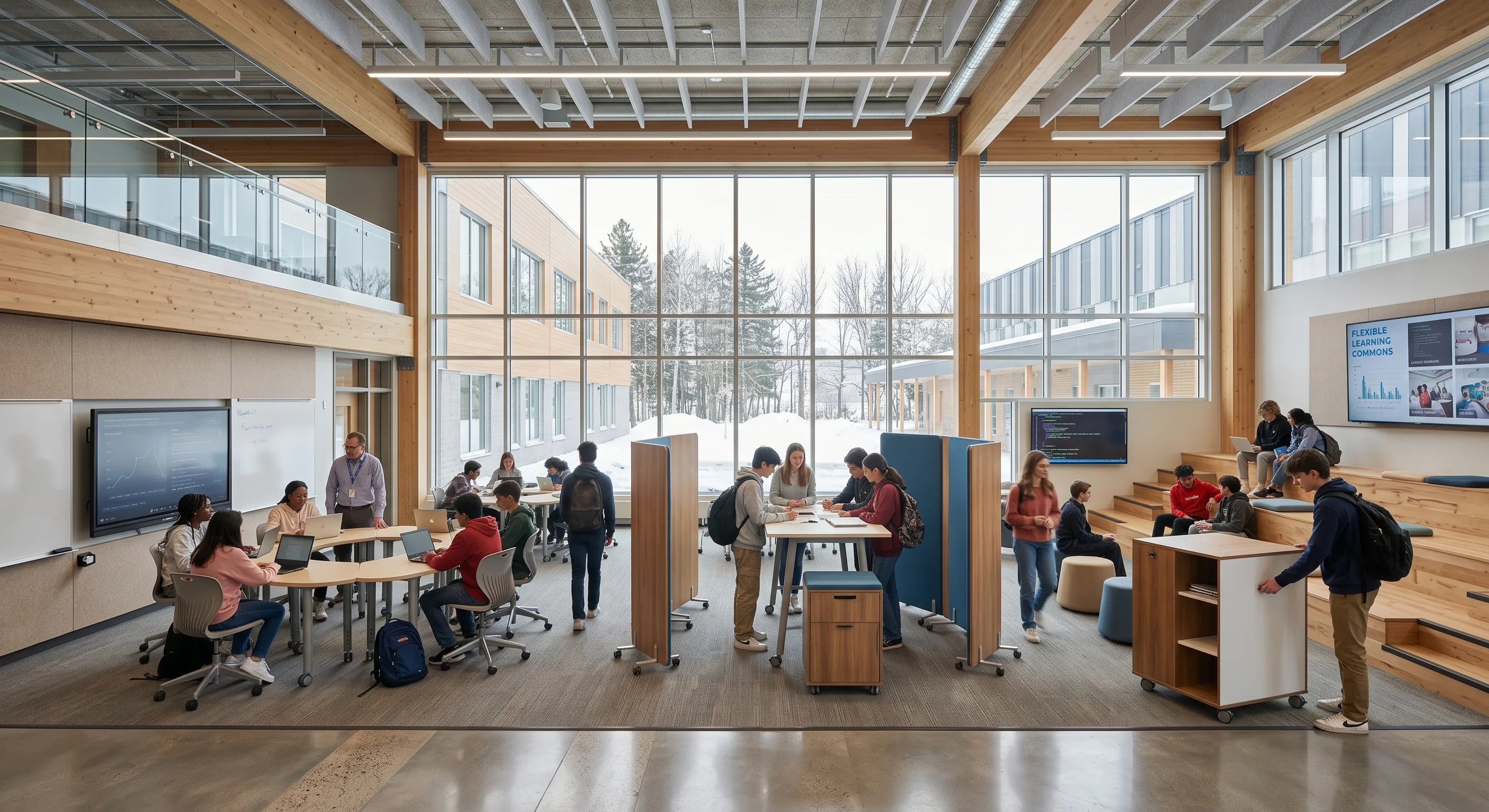
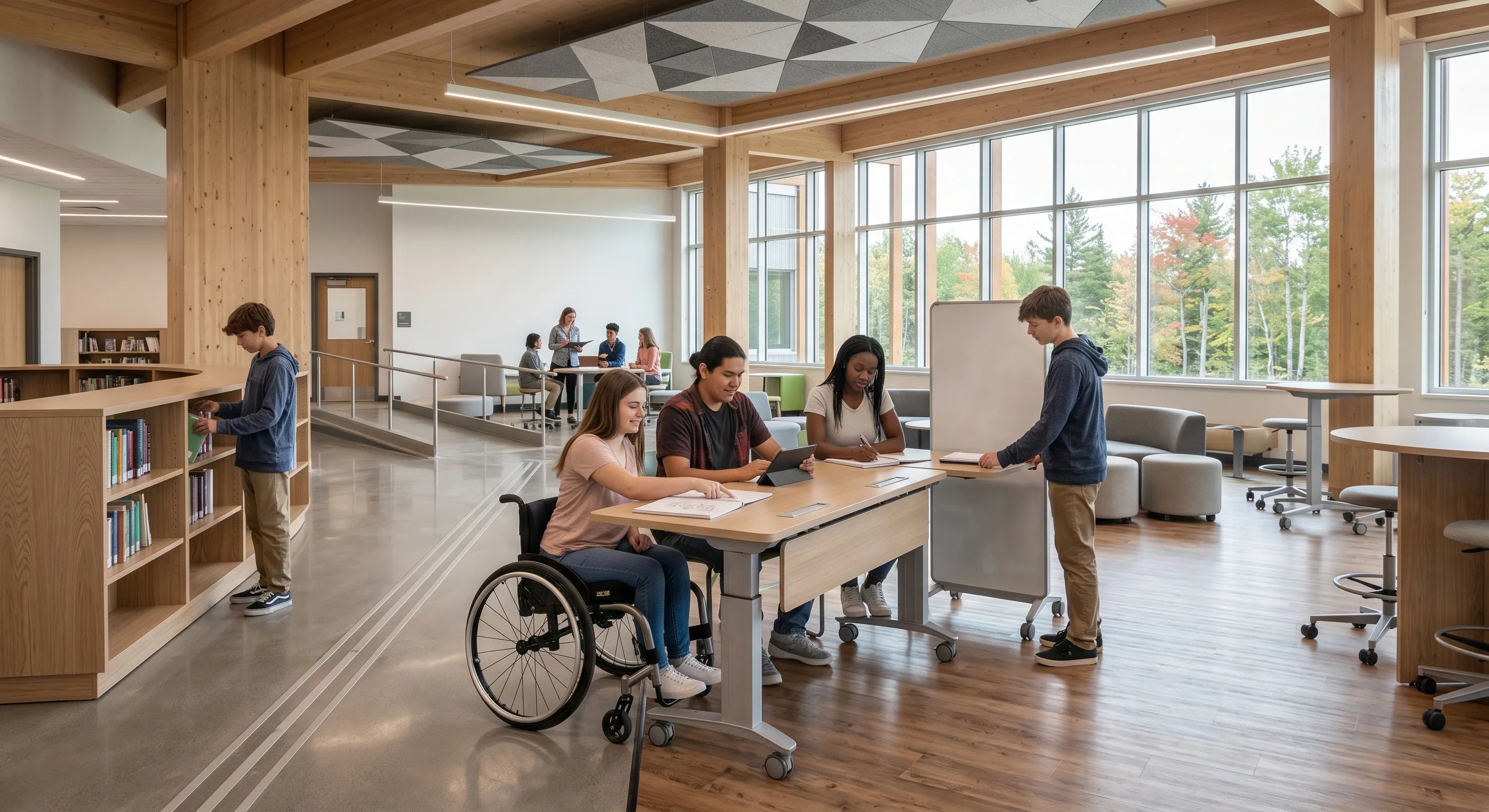
Rows of fixed desks facing a single instructor are increasingly being replaced by collaborative learning zones, flexible seating arrangements, technology-enabled environments, learning commons, makerspaces, and multi-purpose educational spaces.
As educational practices continue to evolve, the physical environment must evolve alongside them.
Today's schools are expected to support a wide range of activities throughout a single day: independent study, group collaboration, project-based learning, presentations, research, community engagement, and technology integration. The challenge for educational institutions is creating environments that can adapt to these changing needs without requiring constant renovations or costly redesigns.
This is where the concept of the future-ready learning environment becomes increasingly important.
Future-ready educational spaces are not simply modern or aesthetically appealing. They are flexible, adaptable, accessible, and designed to support evolving learning models for years to come.
What Is a Future-Ready Learning Environment?
A future-ready learning environment is an educational space intentionally designed to support changing teaching methods, evolving technologies, diverse learner needs, and long-term adaptability.
According to the Organisation for Economic Co-operation and Development (OECD), learning environments should be viewed as ecosystems that support collaboration, innovation, engagement, and lifelong learning (OECD, 2017).
Future-ready environments often prioritize:
- Flexibility
- Collaboration
- Accessibility
- Technology integration
- Wellness
- Sustainability
- Adaptability
- Student-centered learning
Rather than being designed around a single instructional model, these spaces allow educators and students to configure the environment according to their needs.
In many cases, the environment itself becomes an active contributor to the learning experience.
Why Flexibility Matters More Than Ever
Educational institutions face a reality that many traditional facilities were never designed to accommodate: change.
Teaching methods evolve.
Technology evolves.
Student needs evolve.
Community expectations evolve.
As a result, learning spaces must be capable of supporting multiple uses throughout their lifecycle.
Research from the OECD emphasizes that effective learning environments should be adaptable and capable of responding to changing educational demands over time (OECD, 2017).
A classroom that supports only one style of teaching may become outdated quickly.
A flexible classroom can continue serving students regardless of how learning evolves.
This adaptability helps educational institutions maximize long-term value while supporting innovation in teaching and learning.
From Classrooms to Learning Ecosystems
Modern educational facilities increasingly function as interconnected learning ecosystems rather than collections of isolated classrooms.
Examples include:
- Learning commons
- Collaborative work areas
- Open study zones
- Makerspaces
- Libraries
- Student commons
- Multi-purpose rooms
- Informal gathering spaces
According to the Government of Canada, educational infrastructure increasingly supports collaborative and community-focused learning approaches that encourage interaction and engagement (Infrastructure Canada, 2023).
These environments allow students to move seamlessly between different modes of learning.
A student may begin the day in a classroom, collaborate in a shared learning zone, conduct research in a library, and participate in a presentation in an auditorium—all within the same facility.
The physical environment becomes a tool for learning rather than simply a container for it.
The Role of Flexible Furniture
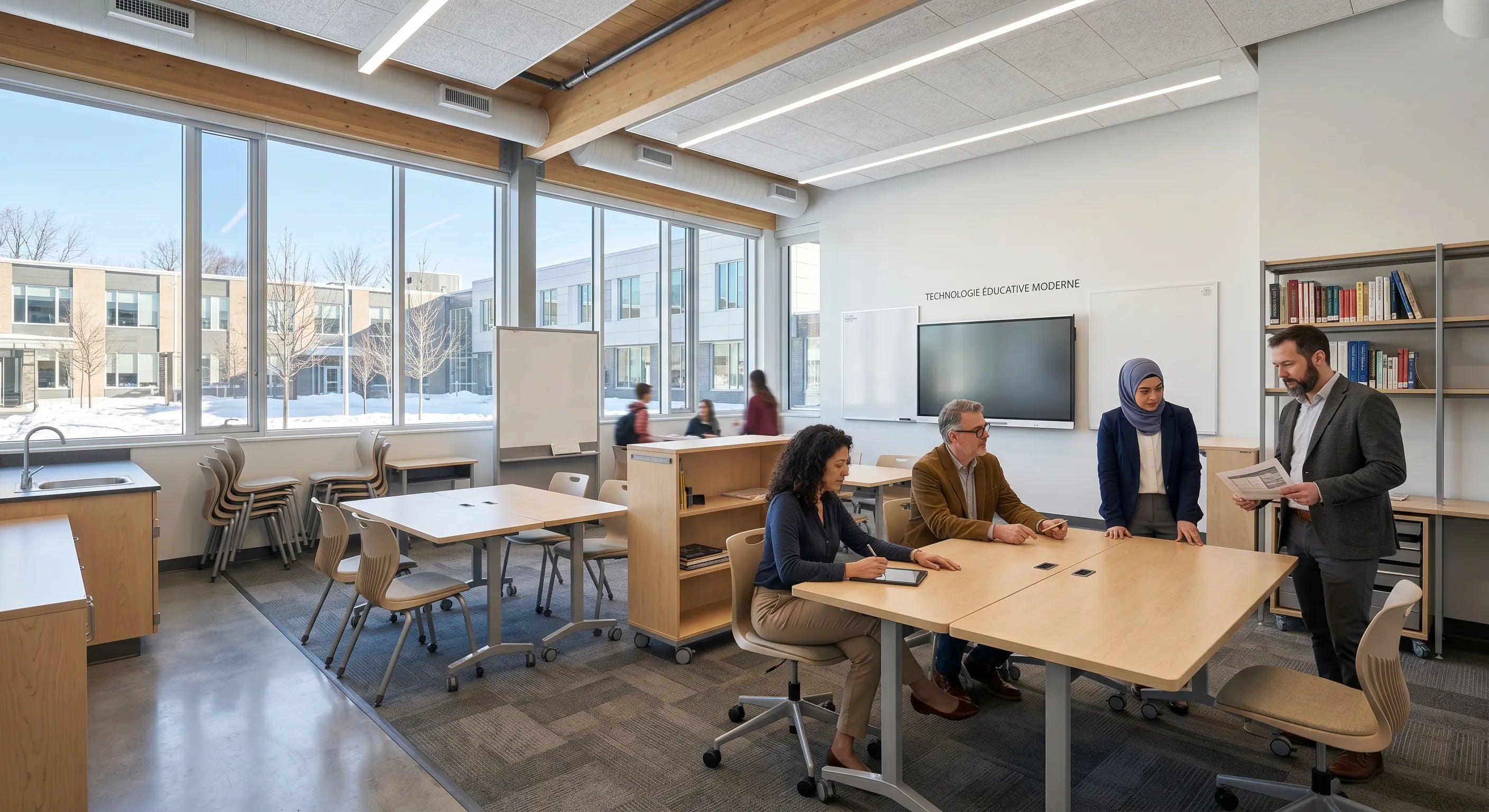
Furniture plays a significant role in creating adaptable educational spaces.
Traditional fixed layouts often limit how a room can be used.
Flexible furniture systems help create environments that can quickly transition between different activities.
Examples include:
- Mobile tables
- Modular seating
- Collaborative workstations
- Reconfigurable desks
- Mobile storage systems
- Multi-use furnishings
Research from educational design organizations suggests that flexible environments can support collaboration, engagement, and active learning by allowing educators to modify spaces based on instructional goals (Learning Environments Applied Research Network [LEaRN], 2022).
The objective is not simply mobility—it is adaptability.
Furniture should support the learning process rather than dictate it.
Learning Commons: The New Educational Hub
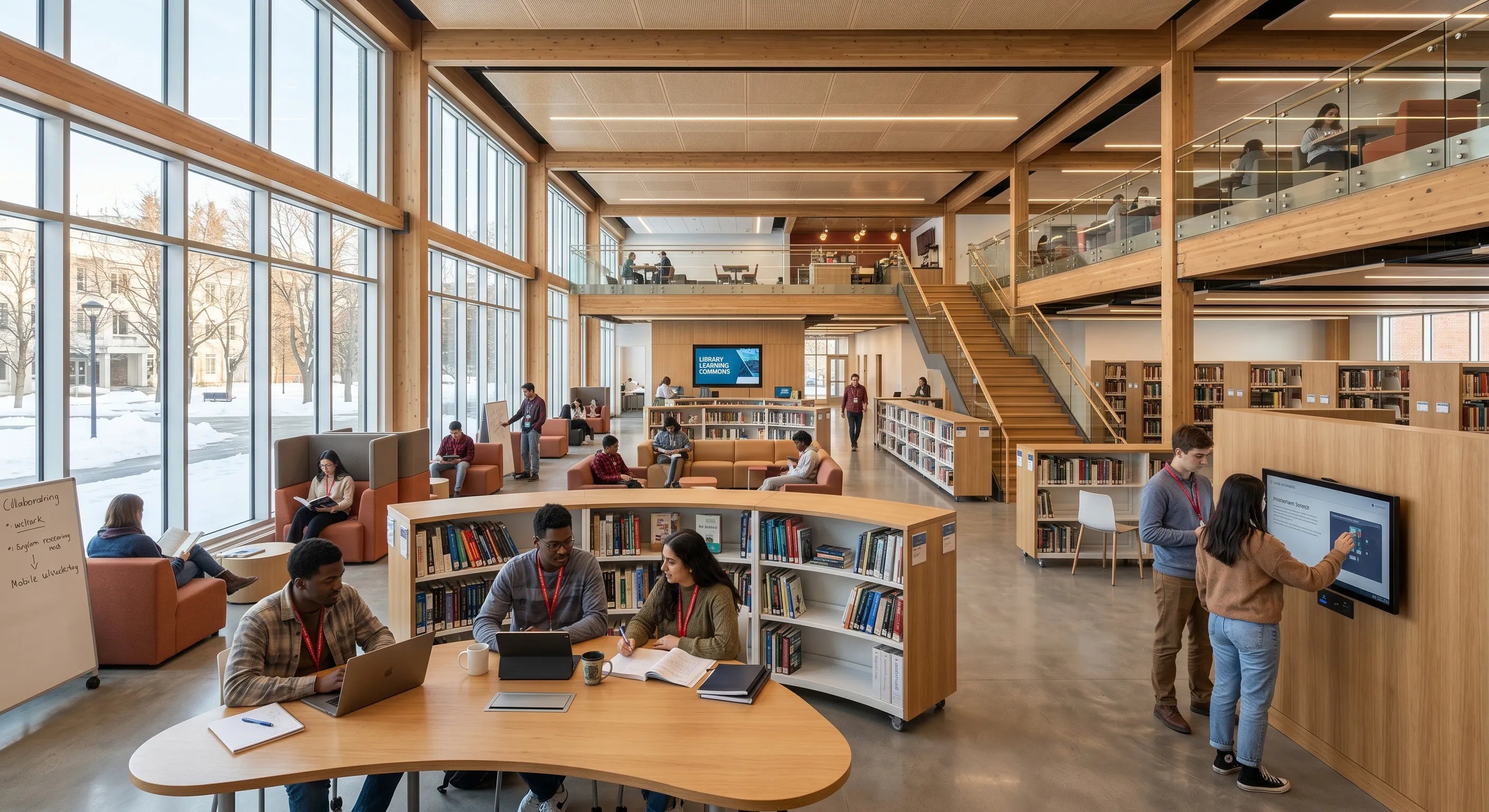
One of the most significant shifts in educational design has been the evolution of the school library.
Many institutions now embrace the concept of the learning commons—a flexible environment that combines research, collaboration, technology, and independent learning.
Learning commons often incorporate:
- Flexible seating
- Collaborative zones
- Technology integration
- Quiet study areas
- Modular shelving systems
- Presentation spaces
This model reflects a broader understanding that learning occurs in multiple ways and requires multiple types of environments.
The future-ready library is no longer defined solely by bookshelves. It is defined by adaptability.
Acoustics and Adaptability
As educational spaces become more open and collaborative, acoustics become increasingly important.
The National Research Council Canada has demonstrated that classroom acoustics can significantly influence speech intelligibility and communication effectiveness (Yang & Bradley, 2009).
Without proper acoustic planning, flexible spaces can become distracting rather than productive.
Common solutions include:
- Acoustic wall panels
- Ceiling systems
- Privacy dividers
- Sound-absorbing materials
- Acoustic zoning strategies
These elements help ensure that collaborative environments remain functional while supporting concentration and communication.
Future-ready design is not only about flexibility—it is also about maintaining performance.
Supporting Accessibility Through Flexible Design
Adaptable learning environments can also contribute to greater accessibility.
The Accessible Canada Act promotes the identification, removal, and prevention of barriers for individuals with disabilities (Government of Canada, 2019).
Flexible educational environments may support accessibility by providing:
- Adjustable furniture
- Adaptable workstations
- Accessible circulation routes
- Inclusive collaboration spaces
- Multiple seating options
When accessibility and flexibility are considered together, educational institutions can create spaces that support a broader range of learners.
Designing for Multiple Users and Multiple Functions
Educational facilities serve many different groups:
- Students
- Educators
- Administrators
- Parents
- Community organizations
- Visitors
As a result, spaces often need to perform multiple functions.
A student commons may serve as:
- A collaborative workspace
- A social gathering area
- An event venue
- A study environment
An auditorium may host:
- Presentations
- Performances
- Assemblies
- Community events
Future-ready environments recognize this reality and are designed to accommodate multiple uses without sacrificing functionality.
Sustainability and Long-Term Value
Future-ready design is also closely connected to sustainability.
Creating adaptable spaces can help extend the useful life of educational environments and reduce the need for frequent renovations.
The Canada Green Building Council notes that resilient and adaptable facilities can contribute to long-term environmental and operational performance (Canada Green Building Council, 2024).
Examples include:
- Durable furniture systems
- Modular storage solutions
- Reconfigurable layouts
- Flexible infrastructure planning
Adaptability can therefore support both educational and sustainability goals.
Bringing It All Together
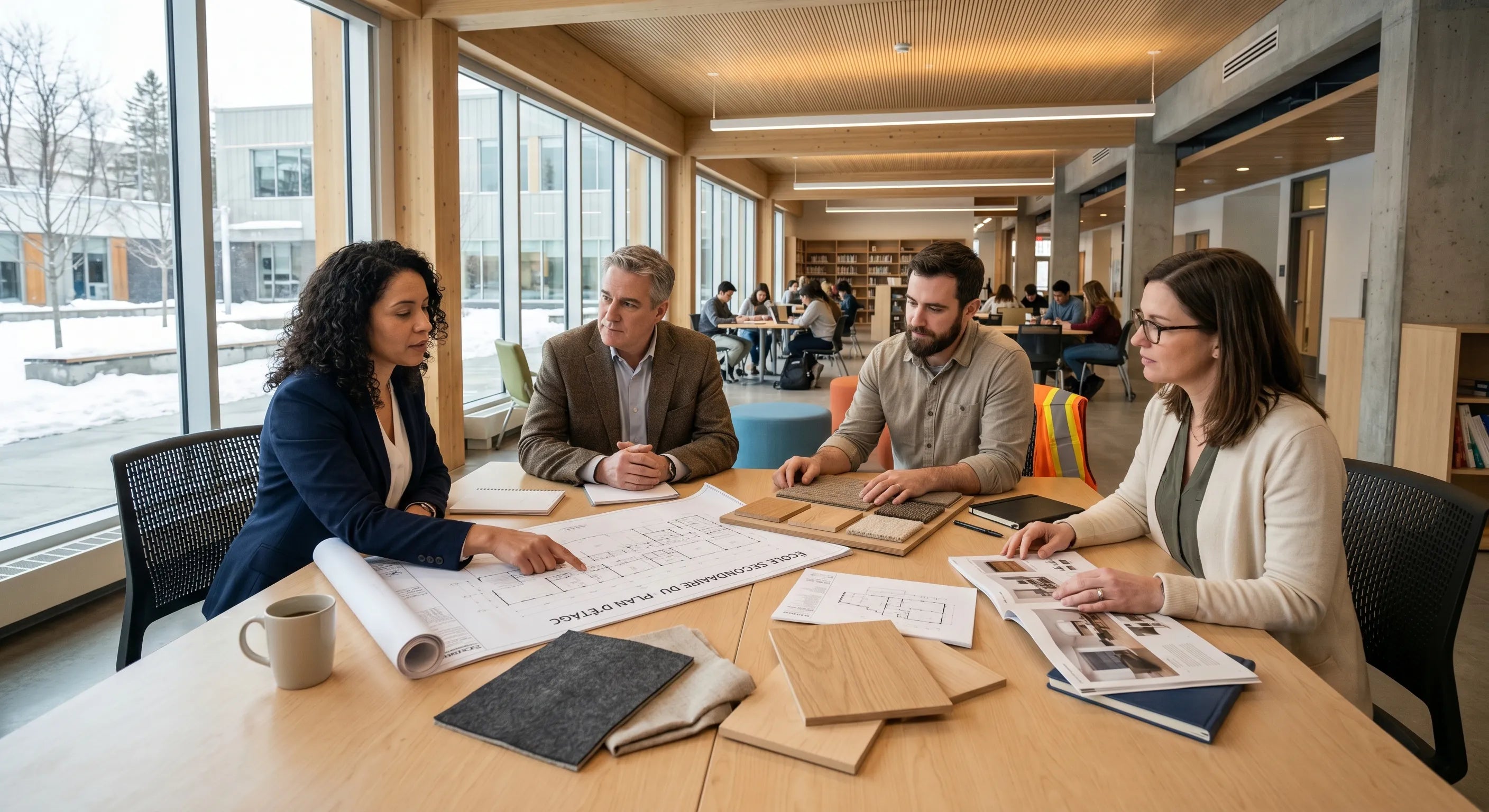
Creating a future-ready learning environment requires more than selecting furniture or choosing finishes.
It involves understanding how space, people, technology, accessibility, acoustics, and educational objectives interact.
Organizations that specialize in educational environments increasingly approach projects through this integrated lens.
For example, INSPERA works with educational institutions to support learning environments through furniture systems, mobile storage solutions, shelving, acoustic treatments, cabinetry, panel systems, and collaborative space planning. These elements align with many of the principles discussed throughout this article: flexibility, adaptability, accessibility, and long-term functionality.
The goal is not simply to furnish a space—it is to help create environments that can evolve alongside the people who use them.
Looking Ahead
The future of education will continue to change.
Learning environments must be prepared to change with it.
Schools that embrace flexibility today will be better positioned to support new teaching methods, emerging technologies, diverse learner needs, and evolving community expectations tomorrow.
Future-ready educational spaces are not defined by a specific design style or furniture collection.
They are defined by their ability to adapt.
By prioritizing flexibility, accessibility, acoustics, collaboration, and long-term value, educational institutions can create environments that remain relevant, effective, and inspiring for generations to come.
Glossary
- Future-Ready Learning Environment: An educational space designed to support evolving teaching methods, technologies, learner needs, and long-term adaptability.
- Learning Commons: A flexible educational environment that combines research, collaboration, technology, and independent learning activities.
- Modular Furniture: Furniture designed with interchangeable or reconfigurable components that allow spaces to be adapted for different uses.
- Acoustic Zoning: The strategic organization of spaces and sound-control measures to support different activities within the same environment.
- Student-Centered Learning: An educational approach that prioritizes learner engagement, collaboration, autonomy, and active participation.
- Flexible Learning Space: An environment that can be easily reconfigured to support multiple teaching and learning activities.
- Universal Design: A design philosophy focused on creating environments that are usable by the widest range of people possible.
References
- Canada Green Building Council. (2024). Green schools and sustainable building practices. Retrieved from: https://www.cagbc.org
- Government of Canada. (2019). Accessible Canada Act (S.C. 2019, c. 10). Retrieved from: https://laws-lois.justice.gc.ca/eng/acts/A-0.6
- Infrastructure Canada. (2023). Community and infrastructure planning resources. Retrieved from: https://www.infrastructure.gc.ca
- Learning Environments Applied Research Network (LEaRN). (2022). Research into innovative learning environments. Retrieved from: https://www.learnetwork.org
- Organisation for Economic Co-operation and Development (OECD). (2017). The OECD handbook for innovative learning environments. Retrieved from: https://www.oecd.org/education/the-oecd-handbook-for-innovative-learning-environments-9789264277274-en.htm
- Organisation for Economic Co-operation and Development (OECD). (2022). Trends shaping education. Retrieved from: https://www.oecd.org/education/trends-shaping-education
- Yang, W., & Bradley, J. S. (2009). Effects of room acoustics on the intelligibility of speech in classrooms. National Research Council Canada. Retrieved from: https://publications-cnrc.canada.ca/eng/view/object/?id=223617b1-bcd3-4df3-aa20-e044b4c43f9c
- UNESCO. (2021). Reimagining our futures together: A new social contract for education. Retrieved from: https://unesdoc.unesco.org/ark:/48223/pf0000379707