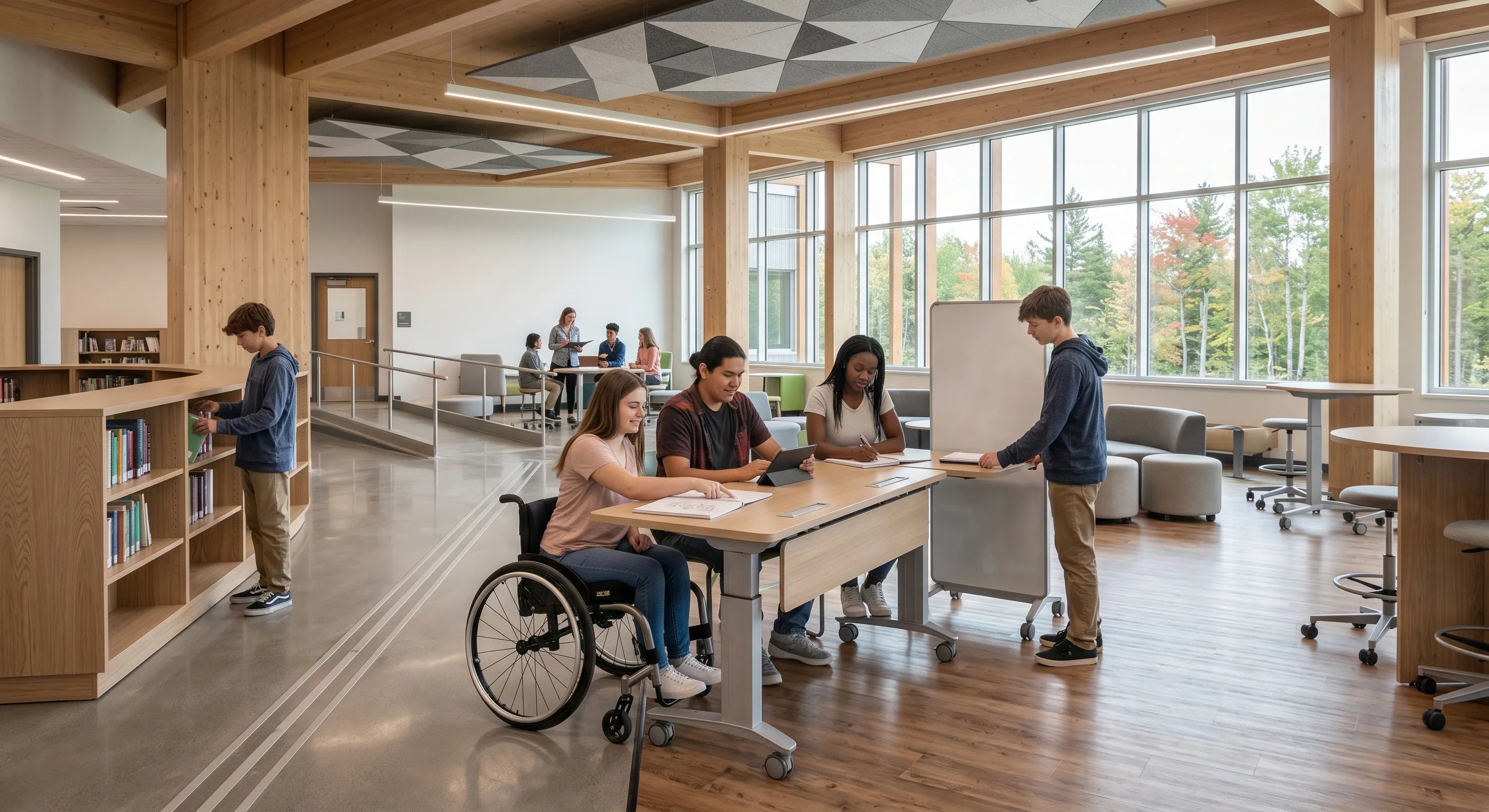
A Strategic Guide for School Administrators, Facility Managers, and Educational Decision-Makers
Whether you're renovating a library, furnishing a new classroom, upgrading a student commons, or developing an entirely new educational facility, procurement decisions have long-term implications.
Educational environments must balance functionality, safety, durability, accessibility, student experience, and budget accountability—all while meeting procurement requirements and stakeholder expectations.
Unfortunately, many projects encounter avoidable challenges because important questions were not addressed during the planning stage.
Successful educational environment projects rarely begin with selecting furniture or finishes. They begin with strategic planning, stakeholder alignment, and a clear understanding of project goals.
This guide outlines key questions educational institutions should ask before launching an interior environment project and highlights considerations commonly found within public procurement frameworks and educational facility planning processes.
Why Procurement Planning Matters
Public-sector procurement is designed to promote fairness, transparency, accountability, and value for taxpayers.
Across Canada, educational institutions frequently operate within procurement frameworks that emphasize:
- Competitive purchasing
- Vendor transparency
- Risk management
- Lifecycle value
- Accessibility
- Sustainability
- Regulatory compliance
Organizations such as the Government of Canada and provincial procurement authorities encourage institutions to evaluate not only upfront costs, but also long-term performance and total cost of ownership (Government of Canada, 2024).
For schools, this means procurement decisions should consider how products and environments will perform over many years of daily use.
Question #1: What Problem Are We Actually Trying to Solve?
Before discussing products, institutions should define the project's purpose.
For example:
- Is the goal to improve student collaboration?
- Increase classroom flexibility?
- Address accessibility concerns?
- Modernize outdated learning spaces?
- Improve acoustics?
- Expand storage capacity?
- Enhance teacher effectiveness?
A clearly defined objective helps guide every subsequent decision.
Without this clarity, projects can become focused on products rather than outcomes.
The most successful educational projects begin with educational goals, not furniture catalogs.
Question #2: Who Needs to Be Involved in the Planning Process?
Educational environments affect multiple stakeholders.
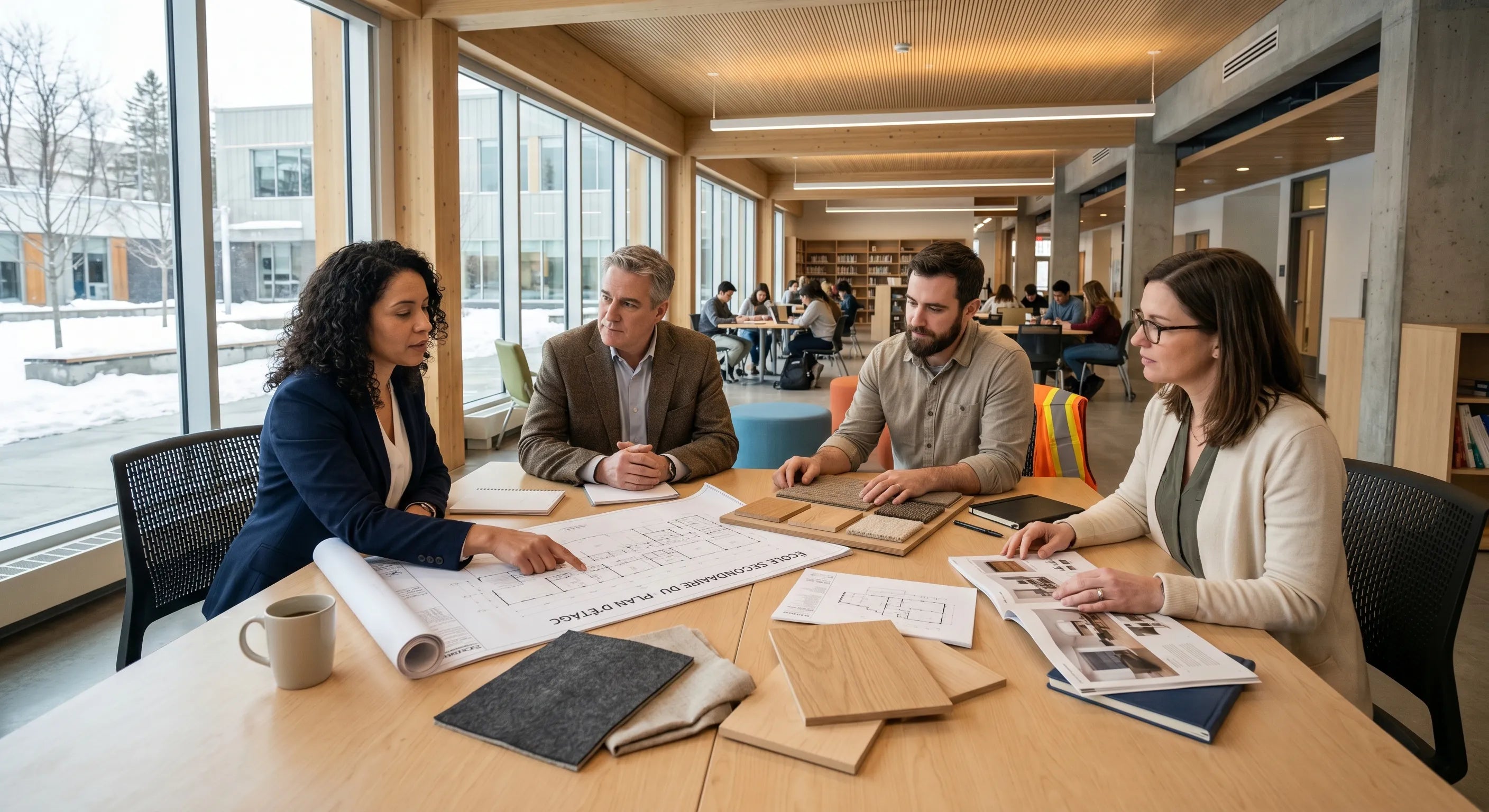
Depending on the project, planning may involve:
- School administrators
- Teachers
- Facilities teams
- Procurement departments
- Architects
- Accessibility consultants
- Students
- Community representatives
According to Infrastructure Canada, stakeholder engagement can help improve project outcomes by ensuring facilities meet the needs of intended users (Infrastructure Canada, 2023).
Early collaboration often reduces costly revisions later in the process.
Question #3: Does the Space Support Accessibility Requirements?
Accessibility should be addressed at the beginning of a project—not after design decisions have already been made.
Educational facilities should consider:
- Circulation routes
- Furniture layouts
- Reach ranges
- Accessible workstations
- Storage accessibility
- Collaborative space design
The Accessible Canada Act and CSA accessibility standards encourage barrier-free environments that support participation by all users (Government of Canada, 2019; CSA Group, 2023).
Questions to ask include:
- Can users navigate the space independently?
- Are furniture systems flexible?
- Are pathways unobstructed?
- Are storage systems accessible?
Accessibility planning benefits everyone—not only individuals with disabilities.
Question #4: How Will the Space Be Used Five or Ten Years From Now?
Educational environments continue to evolve.
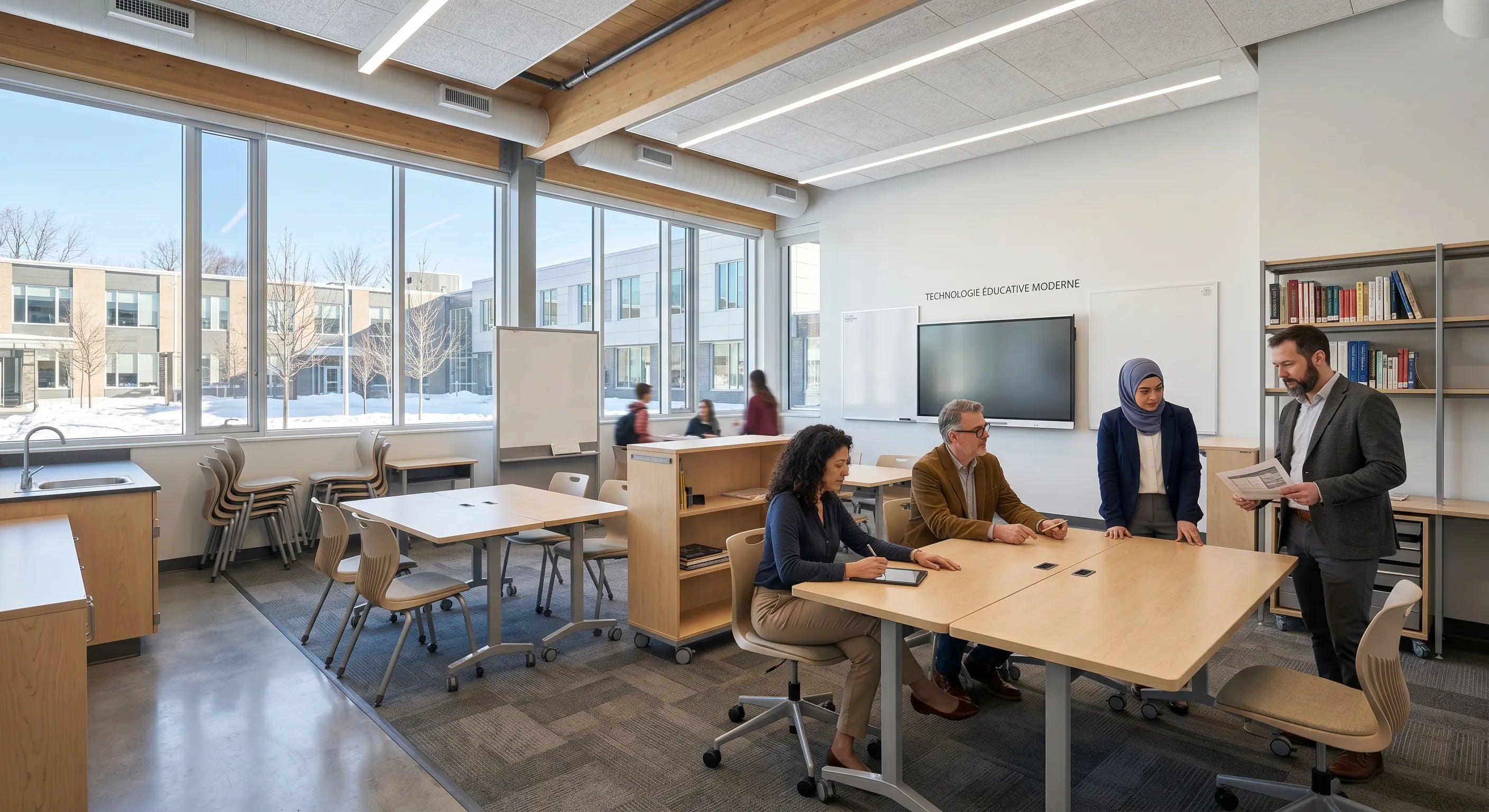
Classrooms today often support:
- Group collaboration
- Technology integration
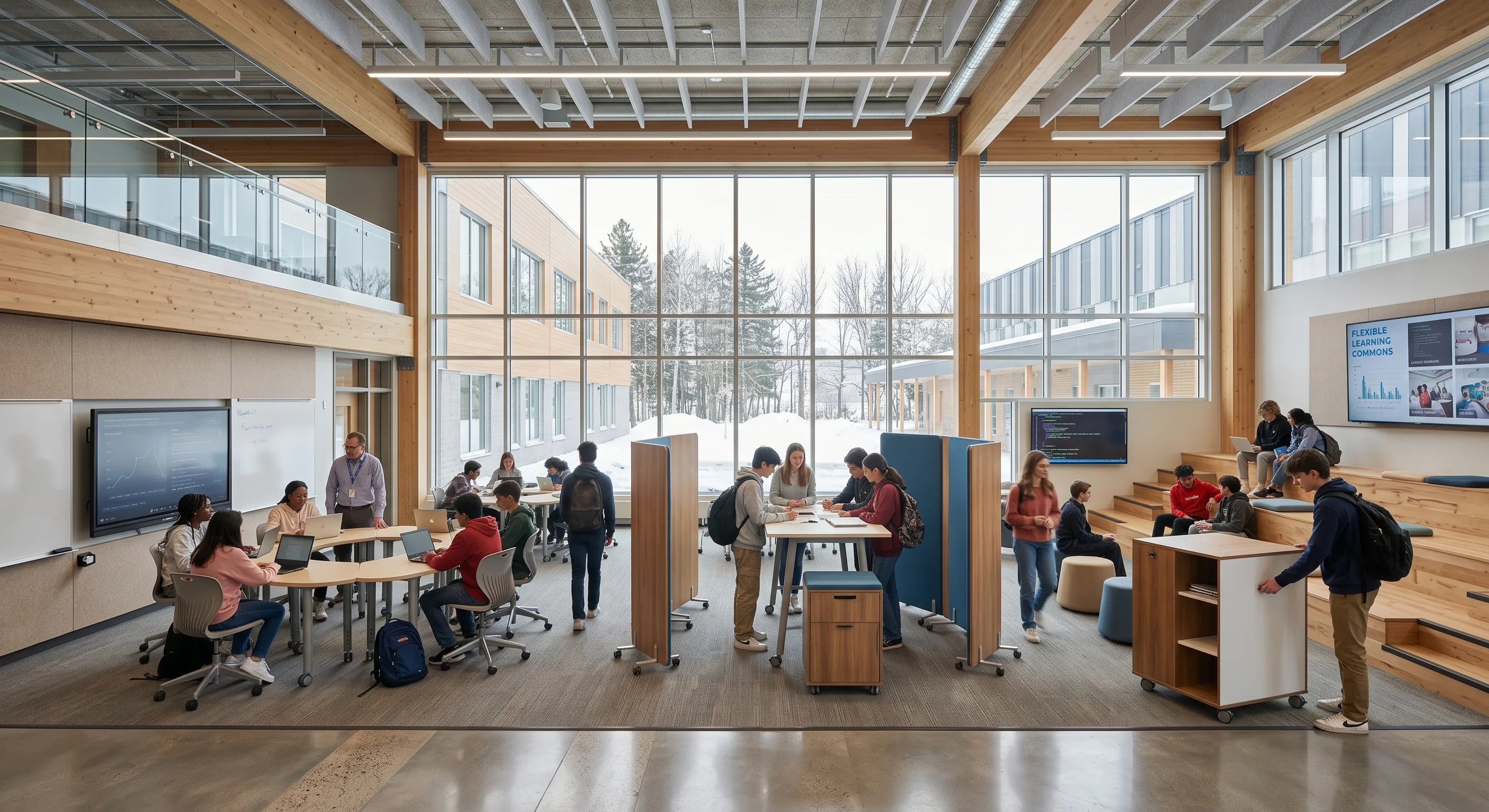
- Flexible learning
- Hybrid instruction
- Multi-purpose activities
A space designed only for today's needs may require significant modification in the future.
Future-ready planning often considers:
- Modular furniture
- Flexible layouts
- Mobile storage systems
- Adaptable learning zones
- Multi-use environments
Long-term adaptability can help institutions maximize their investment.
Question #5: Are Acoustics Being Considered?
Acoustics are frequently overlooked during educational projects despite their significant impact on learning outcomes.
Research from the National Research Council Canada demonstrates that classroom acoustics can directly affect speech intelligibility and communication effectiveness (Yang & Bradley, 2009).
Important considerations include:
- Classroom acoustics
- Learning commons acoustics
- Library environments
- Theater spaces
- Administrative offices
- Collaboration zones
Questions to ask:
- Will students be able to hear clearly?
- Is reverberation controlled?
- Are acoustic treatments required?
- Does the space support focused learning?
Acoustic planning often involves wall panels, ceiling systems, divider panels, and space design strategies.
Question #6: What Are the Lifecycle Costs?
Lowest purchase price does not always represent the best value.
The Government of Canada encourages lifecycle thinking when evaluating procurement decisions (Government of Canada, 2024).
Lifecycle considerations may include:
- Durability
- Maintenance requirements
- Product lifespan
- Repairability
- Replacement costs
- Operational efficiency
Educational furniture, shelving systems, cabinetry, flooring, and panel systems are often used intensively for many years.
Investing in durable solutions may reduce long-term costs and disruption.
Question #7: Does the Design Support Safety and Compliance?
Educational facilities must consider various regulatory and operational requirements.
Depending on the project, considerations may include:
- Building codes
- Accessibility standards
- Fire performance requirements
- Occupant safety
- Egress routes
- Material performance
Questions to ask:
- Are pathways clear?
- Do materials meet applicable requirements?
- Does furniture placement affect circulation?
- Are assembly spaces appropriately planned?
Compliance considerations should be integrated into project planning rather than treated as final-stage reviews.
Question #8: Who Will Coordinate the Entire Project?
One of the most common challenges in educational projects is fragmentation.
Multiple vendors may be involved in:
- Design
- Furniture supply
- Millwork
- Acoustic systems
- Flooring
- Installation
- Logistics
- Project management
Without coordination, scheduling conflicts and communication gaps can occur.
Many institutions now seek integrated project delivery approaches that simplify coordination and reduce administrative burden.
Organizations involved in educational environments often provide planning, fabrication, installation, and project management support to help streamline implementation.
This integrated approach reflects how companies such as INSPERA support educational facilities through furniture systems, shelving, acoustic solutions, cabinetry, flooring, and turnkey interior environment projects.
Question #9: How Will Success Be Measured?
Every project should establish measurable objectives.
Examples may include:
- Improved collaboration
- Better accessibility
- Increased storage efficiency
- Enhanced acoustics
- Greater flexibility
- Improved user satisfaction
Clearly defined success criteria can help guide decision-making throughout the project lifecycle.
Question #10: Does the Environment Reflect the Institution's Mission?
Educational spaces communicate values.
Students, educators, families, and visitors often form impressions based on the environments they experience.
Questions to consider include:
- Does the space support learning?
- Does it promote inclusion?
- Does it encourage collaboration?
- Does it create a welcoming atmosphere?
- Does it reflect institutional priorities?
The most effective educational environments support both operational goals and community aspirations.
A Practical School Procurement Checklist
Before beginning an educational environment project, consider the following:
- ✓ Have project objectives been clearly defined?
- ✓ Have all key stakeholders been consulted?
- ✓ Have accessibility requirements been reviewed?
- ✓ Have acoustics been evaluated?
- ✓ Have lifecycle costs been considered?
- ✓ Are future needs being addressed?
- ✓ Have compliance requirements been reviewed?
- ✓ Is project coordination clearly assigned?
- ✓ Have success metrics been established?
- ✓ Does the design align with institutional goals?
Looking Ahead
Educational facilities are more than buildings—they are environments where students learn, collaborate, create, and grow.
Thoughtful procurement planning helps ensure that these spaces remain effective, inclusive, and adaptable for years to come.
Whether a project involves classrooms, libraries, student commons, theaters, administrative offices, shelving systems, acoustic treatments, cabinetry, or complete interior environments, asking the right questions early can significantly improve outcomes.
By approaching procurement strategically, institutions can move beyond short-term purchasing decisions and create educational environments that deliver lasting value.
Glossary
- Public Procurement: The process through which government agencies and public institutions acquire goods and services while promoting transparency, fairness, and accountability.
- Lifecycle Cost: The total cost associated with a product or system throughout its lifespan, including acquisition, maintenance, operation, and replacement.
- Educational Environment: The physical spaces where teaching, learning, collaboration, and student activities occur.
- Accessibility: The design of environments, products, and services to ensure they can be used by people with a wide range of abilities.
- Turnkey Project: A project delivery approach in which planning, procurement, installation, and implementation are coordinated through a single provider or project team.
- Speech Intelligibility: The degree to which spoken communication can be clearly understood within a space.
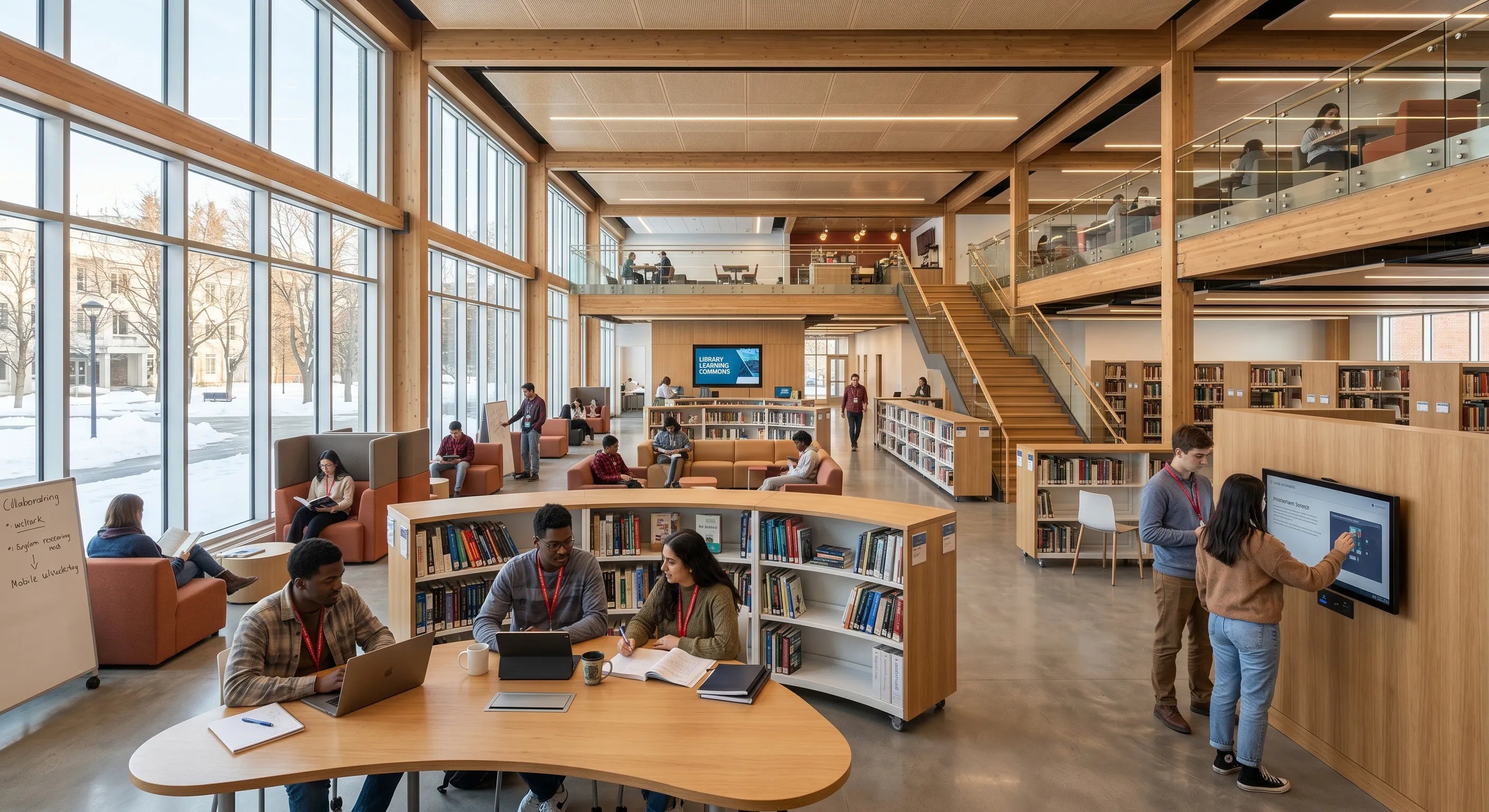
- Learning Commons: A flexible educational environment designed to support collaboration, independent learning, and community engagement.
References
- Canadian Standards Association (CSA Group). (2023). CSA B651: Accessible design for the built environment. Retrieved from: https://www.csagroup.org/store/product/CSA%20B651
- Government of Canada. (2019). Accessible Canada Act (S.C. 2019, c. 10). Retrieved from: https://laws-lois.justice.gc.ca/eng/acts/A-0.6
- Government of Canada. (2024). Public Services and Procurement Canada: Procurement and Vendor Information. Retrieved from: https://www.canada.ca/en/public-services-procurement.html
- Government of Canada. (2024). Directive on the Management of Procurement. Retrieved from: https://www.tbs-sct.canada.ca/pol/doc-eng.aspx?id=32694
- Infrastructure Canada. (2023). Community and Infrastructure Planning Resources. Retrieved from: https://www.infrastructure.gc.ca
- National Research Council Canada. (2020). National Building Code of Canada 2020. Retrieved from: https://nrc.canada.ca/en/certifications-evaluations-standards/codes-canada/publications-codes-canada/national-building-code-canada-2020
- National Research Council Canada. (2024). Codes Canada Resource Centre. Retrieved from: https://codes-guides.nrc-cnrc.gc.ca
- Ontario Ministry of Government and Consumer Services. (2024). Broader Public Sector Procurement Directive. Retrieved from: https://www.ontario.ca/page/broader-public-sector-accountability
- Yang, W., & Bradley, J. S. (2009). Effects of room acoustics on the intelligibility of speech in classrooms. National Research Council Canada. Retrieved from: https://publications-cnrc.canada.ca/eng/view/object/?id=223617b1-bcd3-4df3-aa20-e044b4c43f9c