How Modern Libraries Are Becoming the Heart of Learning, Collaboration, and Innovation
For generations, school libraries were primarily viewed as places for books, quiet reading, and independent research. Today, however, educational institutions across Canada are reimagining what a library can be.
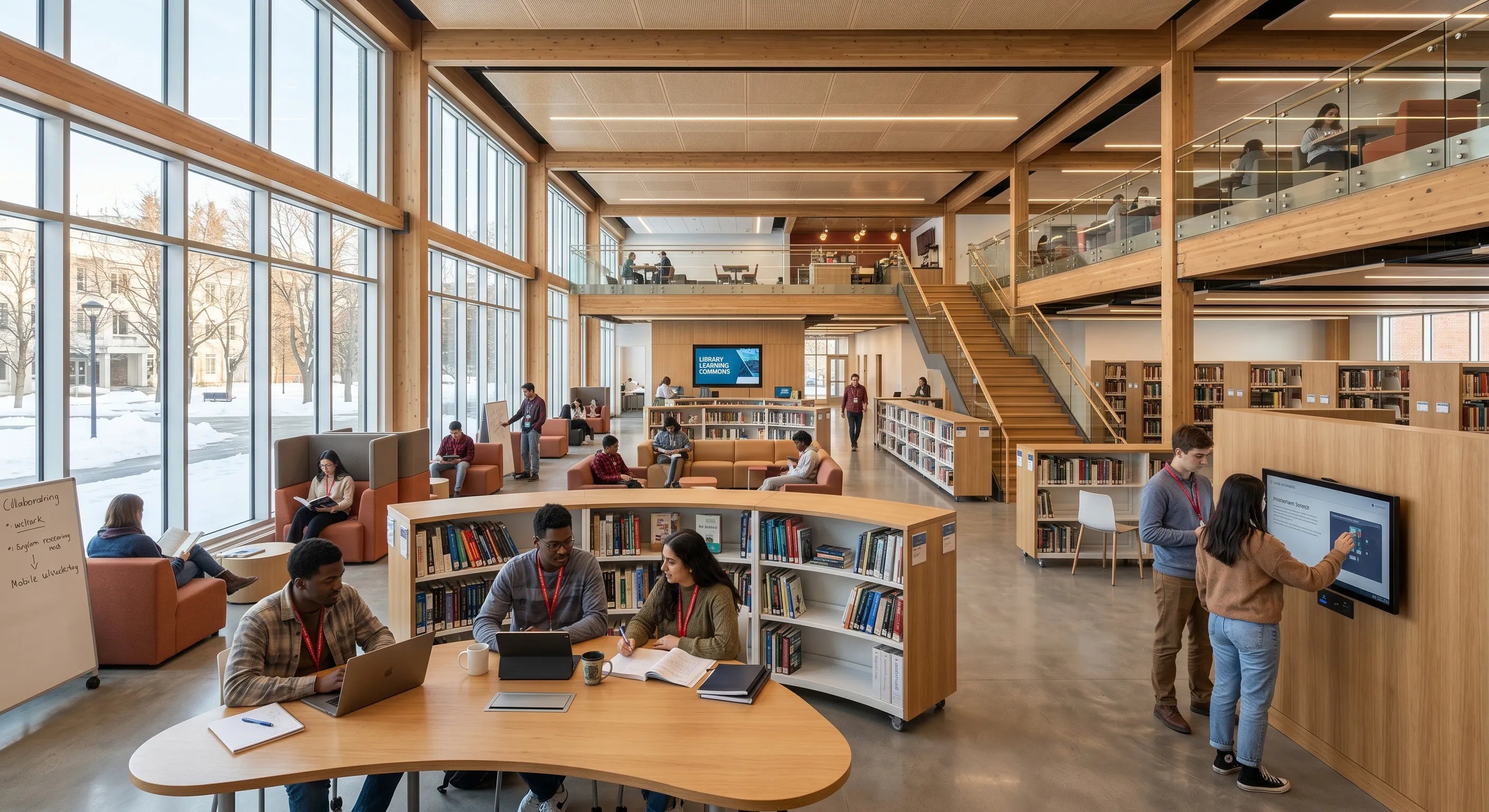
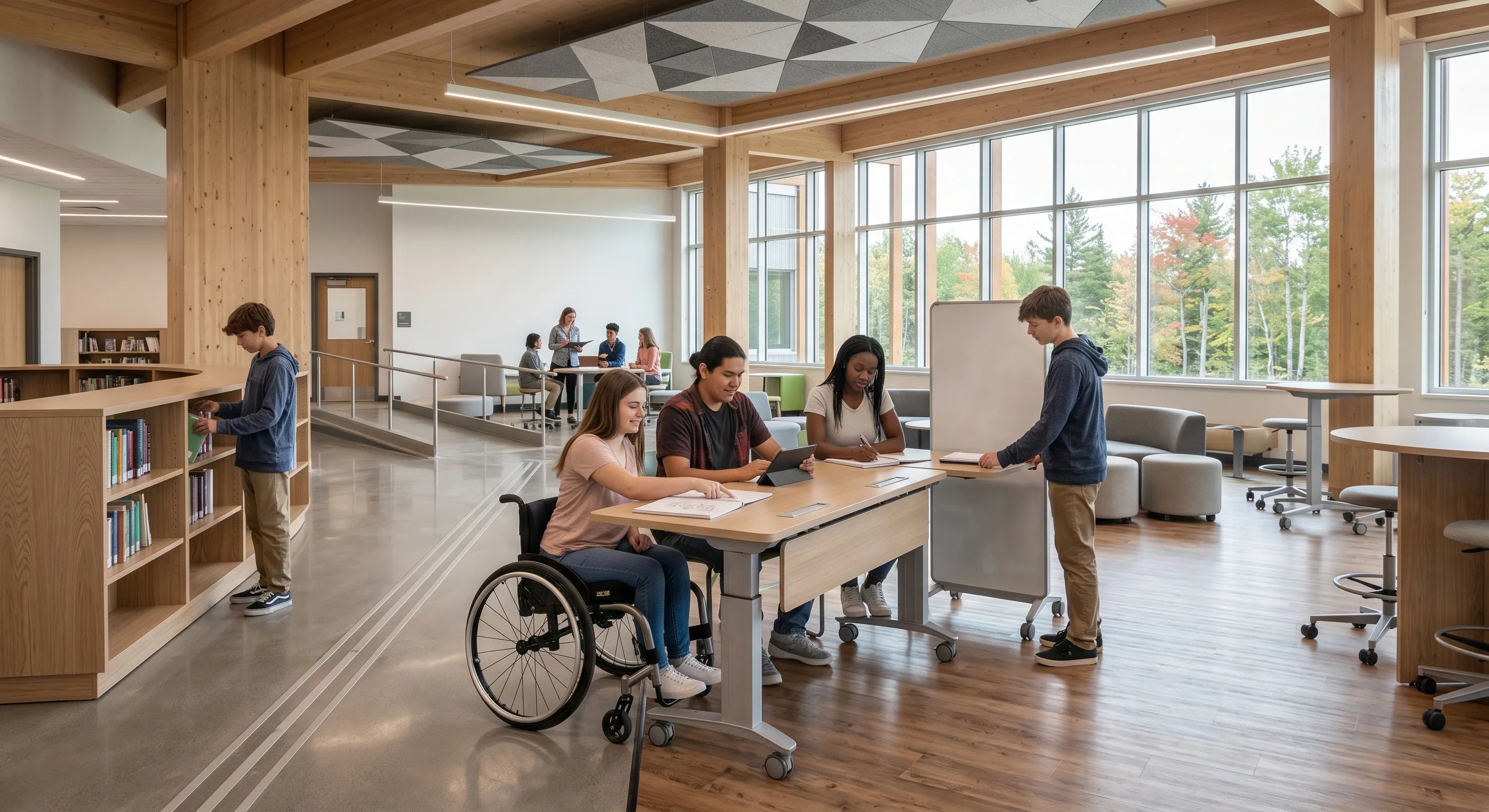
Modern libraries are evolving into dynamic learning environments that support collaboration, creativity, digital literacy, research, community engagement, and student well-being. Increasingly referred to as Library Learning Commons (LLCs), these spaces serve as flexible hubs where students, educators, and communities can gather, learn, and create together.
This shift reflects broader changes in education itself. As teaching methods become more collaborative and technology-enabled, learning environments must adapt accordingly.
For educational institutions planning renovations, expansions, or new facilities, understanding current library design trends can help ensure spaces remain relevant, functional, and inspiring for years to come.
The Evolution of the School Library
One of the most significant developments in Canadian education has been the transformation of traditional school libraries into Library Learning Commons.
According to Canadian School Libraries (CSL), Learning Commons approaches are designed to create collaborative, flexible, and learner-centered environments that support creativity, inquiry, critical thinking, and knowledge-building (Canadian School Libraries, 2024a). Rather than functioning solely as repositories for books, modern libraries are increasingly becoming active centres for learning throughout the school community.
Canadian educational organizations describe the modern Learning Commons as a space where students can engage in research, collaborative projects, technology-enhanced learning, and interdisciplinary exploration (Canadian School Libraries, 2024b).
The library is no longer simply a destination. It is becoming a learning ecosystem.
Trend #1: From Libraries to Learning Commons
Across Canada, educational institutions are increasingly adopting the Learning Commons model.
The Learning Commons philosophy emphasizes:
- Collaboration
- Flexibility
- Inquiry-based learning
- Student engagement
- Technology integration
- Community participation
Canadian School Libraries notes that Learning Commons environments are designed to support diverse learning experiences while encouraging creativity, innovation, and active participation (Canadian School Libraries, 2024b).
As a result, many libraries now include:
- Collaborative work areas
- Technology stations
- Presentation spaces
- Flexible seating
- Group study zones
- Quiet reflection areas
This trend reflects a broader shift toward learner-centered educational environments.
Trend #2: Flexible Layouts That Adapt Throughout the Day
Flexibility has become one of the most important characteristics of modern library design.
Educational spaces today often support multiple activities simultaneously:
- Independent reading
- Research projects
- Small-group collaboration
- Classroom instruction
- Community events
- Technology-based learning
Fixed layouts can limit these functions.
As a result, many educational institutions are adopting:
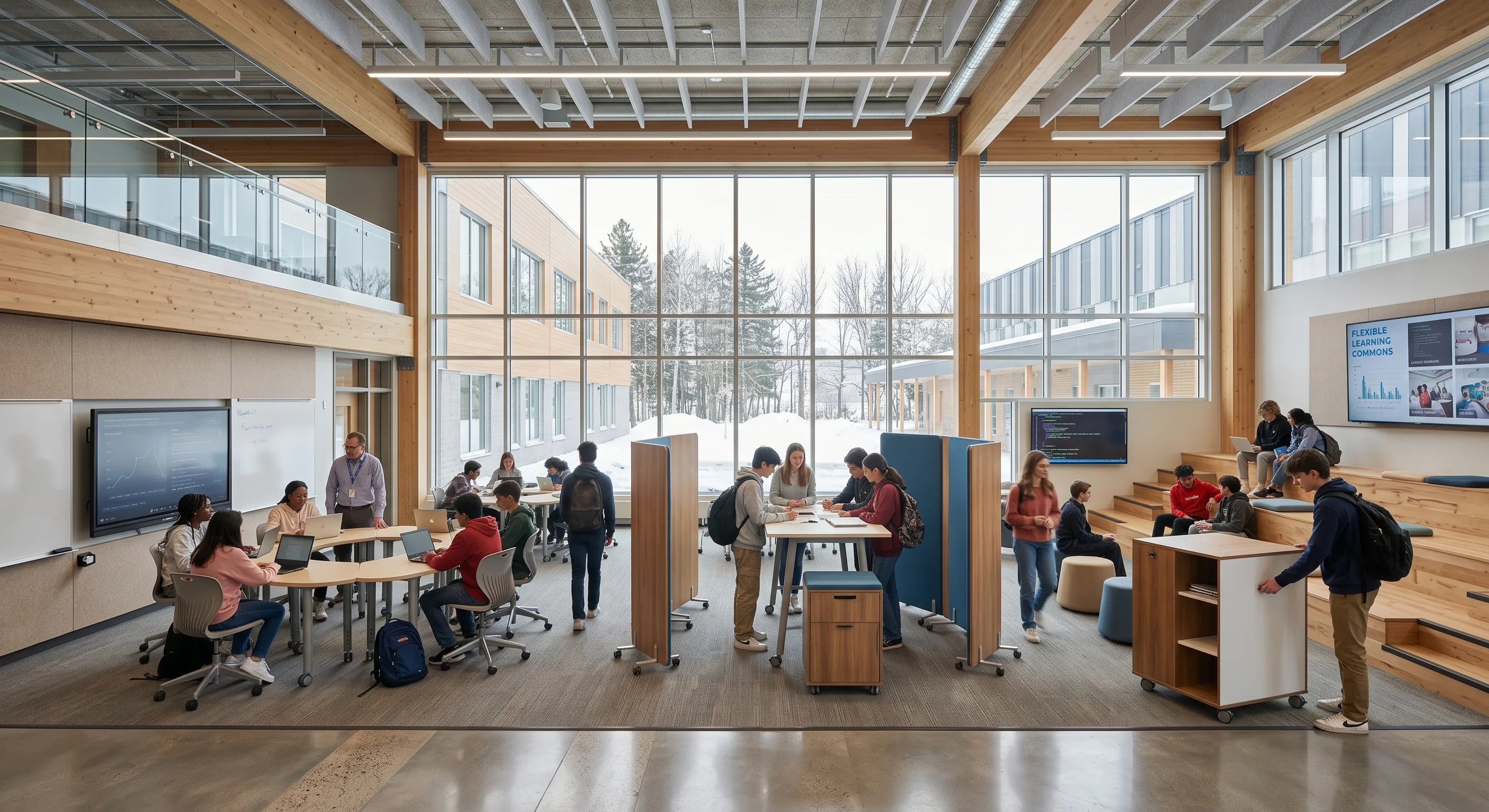
- Mobile furniture
- Modular seating
- Flexible shelving systems
- Reconfigurable study areas
- Movable partitions
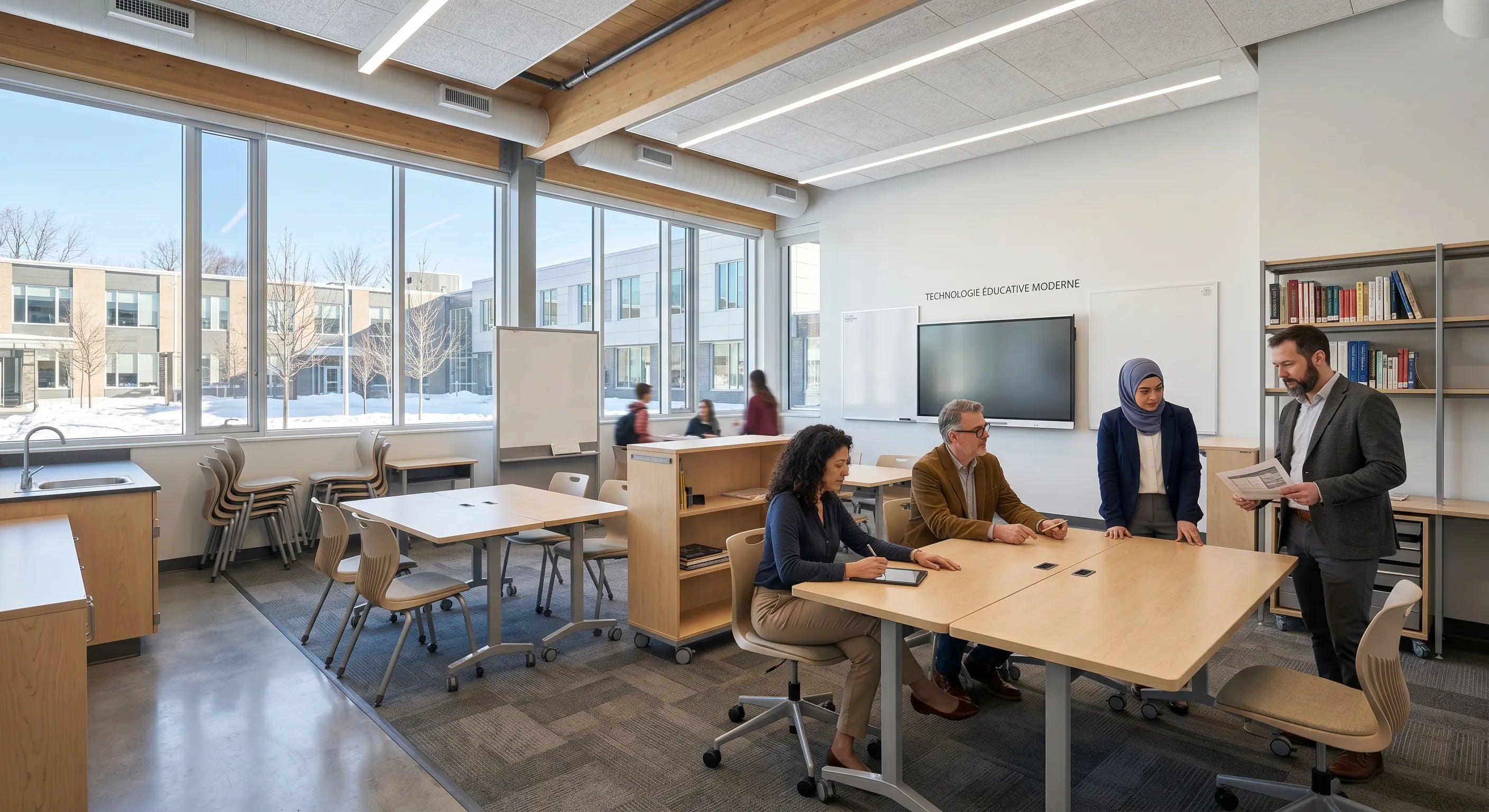
Flexible layouts allow libraries to adapt throughout the day without requiring major changes to the physical space.
According to Leading Learning: Standards of Practice for School Library Learning Commons in Canada, learning environments should remain responsive to the evolving needs of learners and educators (Canadian School Libraries, 2024c).
Trend #3: Collaboration-Centered Design
Modern educational philosophies increasingly emphasize collaboration as a critical skill.
As a result, libraries are being designed to facilitate interaction rather than simply accommodate individual study.
Common design features include:
- Group work tables
- Collaborative technology stations
- Shared project spaces
- Informal meeting areas
- Flexible discussion zones
Canadian School Libraries highlights the importance of participatory learning environments that encourage collaboration, creativity, and interdisciplinary learning (Canadian School Libraries, 2024b).
The modern library is becoming a place where students build knowledge together.
Trend #4: Acoustic Zoning for Different Learning Styles
As libraries become more active and collaborative, acoustics have become increasingly important.
Students use libraries in different ways:
- Quiet reading
- Focused research
- Group discussions
- Multimedia projects
- Presentations
Without proper acoustic planning, these activities can conflict with one another.
Modern library design increasingly incorporates acoustic zoning strategies such as:
- Acoustic wall panels
- Sound-absorbing ceiling systems
- Privacy screens
- Soft furnishings
- Dedicated quiet areas
Research from the National Research Council Canada has shown that acoustic conditions significantly influence speech intelligibility and learning effectiveness (Yang & Bradley, 2009).
Creating zones with varying acoustic characteristics allows libraries to support multiple activities simultaneously while maintaining comfort and functionality.
Trend #5: Technology Integration Without Sacrificing Human Connection
Technology continues to reshape education.
Today's libraries often support:
- Digital research
- Online collaboration
- Multimedia production
- Virtual learning
- Device charging
- Interactive learning tools
However, successful library design balances technology with human interaction.
Canadian educational researchers increasingly emphasize that Learning Commons environments should support both digital engagement and collaborative community experiences (Canadian School Libraries, 2024a).
The goal is not to create technology centres. The goal is to create learning environments where technology supports meaningful educational experiences.
Trend #6: Purposeful Shelving Systems
Books remain an essential part of educational environments.
However, shelving systems are evolving.
Modern libraries often use shelving that supports:
- Visibility
- Accessibility
- Flexibility
- Wayfinding
- Space efficiency
Rather than creating barriers within a room, shelving systems increasingly contribute to an open and welcoming environment.
Modular shelving can also help libraries adapt as collections, technologies, and learning priorities change over time.
Trend #7: Student Well-Being and Belonging
Educational institutions increasingly recognize that physical environments influence student well-being.
Library design now frequently considers:
- Comfort
- Inclusivity
- Accessibility
- Psychological safety
- Sense of belonging
Canadian School Libraries identifies Learning Commons as spaces that support intellectual, cultural, and personal growth while fostering equitable access to resources and learning opportunities (Canadian School Libraries, 2024b).
Comfortable seating, natural light, inclusive layouts, and welcoming collaborative spaces all contribute to a positive educational experience.
Trend #8: Multi-Purpose Community Spaces
Many educational institutions are designing libraries that serve broader community functions.
Libraries increasingly host:
- Workshops
- Presentations
- Parent engagement events
- Community meetings
- Professional development sessions
- Student showcases
This requires spaces that can easily transition between different uses.
Flexible furniture, mobile storage systems, adaptable seating arrangements, and movable acoustic solutions help support these evolving functions.
What This Means for Educational Planning
The modern school library is no longer defined by a single purpose.
Instead, it serves as a flexible, collaborative, and technology-enabled environment that supports a wide range of educational activities.
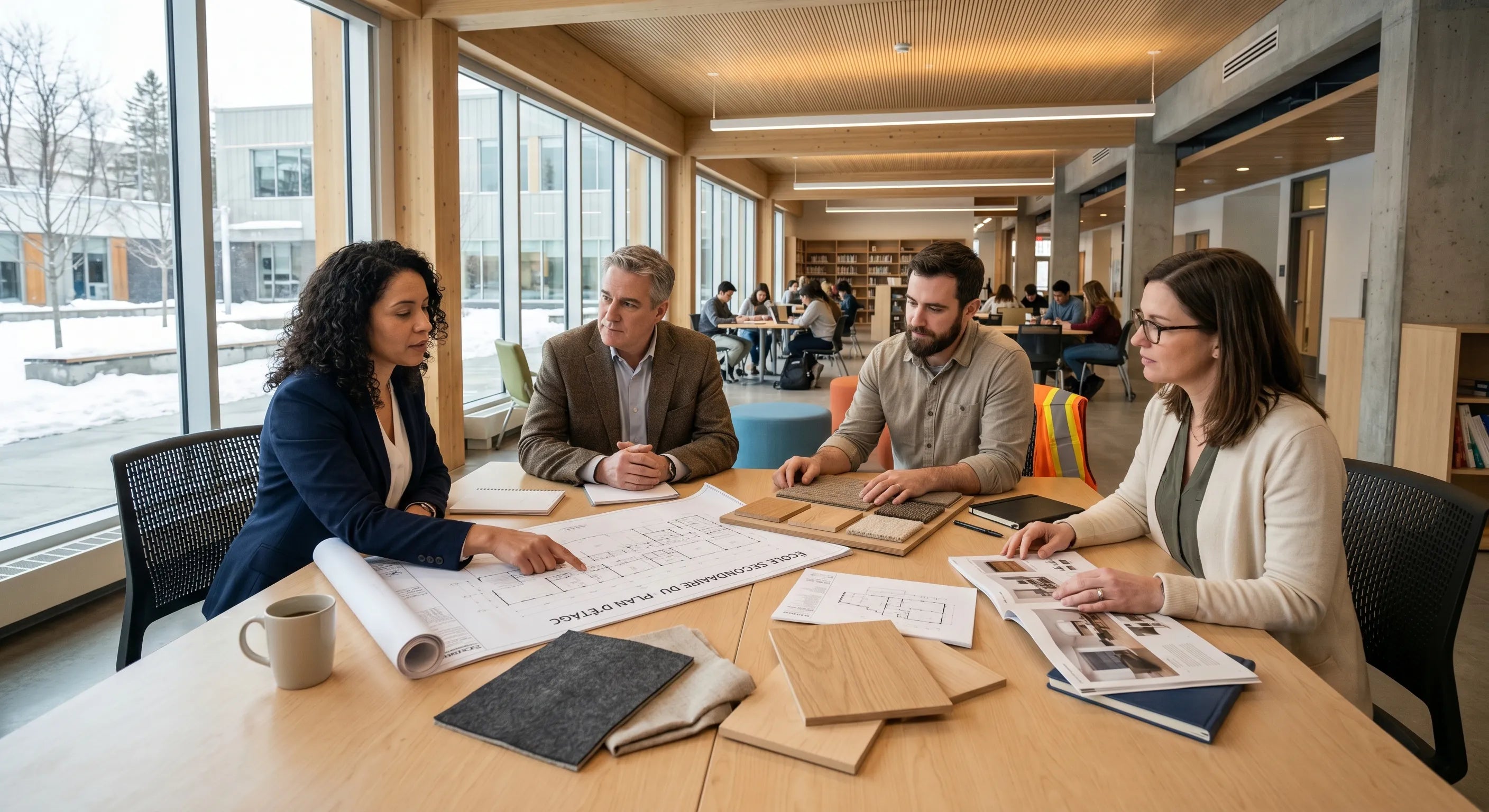
Successful library planning often requires consideration of:
- Learning objectives
- Accessibility requirements
- Furniture systems
- Shelving solutions
- Acoustic performance
- Technology integration
- Future adaptability
Organizations involved in educational environment planning increasingly recognize that these elements must work together to create effective learning spaces.
For example, INSPERA's work in educational environments aligns closely with many of the trends discussed throughout this article. Through solutions that may include shelving systems, collaborative furniture, cabinetry, acoustic treatments, mobile storage, and integrated educational interiors, the focus remains on helping institutions create environments that support evolving learning needs while maintaining flexibility, accessibility, and long-term functionality.
Rather than viewing libraries as standalone rooms, this approach reflects the growing understanding that libraries are central components of the overall learning experience.
Looking Ahead
Canadian school libraries continue to evolve alongside education itself.
The future library is not defined by bookshelves alone.
It is defined by its ability to support collaboration, inquiry, creativity, technology, accessibility, and lifelong learning.
As educational institutions plan for the future, investing in adaptable and learner-centered library environments can help create spaces that remain relevant for decades to come.
The most successful libraries will not simply store information. They will inspire discovery.
Glossary
- Library Learning Commons (LLC): A learner-centered educational environment that combines physical and digital resources to support collaboration, inquiry, creativity, and knowledge-building.
- Flexible Learning Space: An environment that can be easily adapted to support multiple educational activities and teaching approaches.
- Acoustic Zoning: The strategic organization of spaces and sound-control measures to accommodate different activities within the same environment.
- Collaborative Learning: An educational approach in which students work together to solve problems, complete projects, and build knowledge.
- Modular Shelving: Shelving systems designed to be reconfigured, expanded, or adapted as needs change.
- Learning Ecosystem: An interconnected educational environment where multiple learning experiences, resources, and interactions occur.
- Speech Intelligibility: The degree to which spoken communication can be clearly understood within a space.
References
- Canadian School Libraries. (2024a). Leading the way with the Library Learning Commons. Retrieved from: https://www.canadianschoollibraries.ca/leading-the-way/
- Canadian School Libraries. (2024b). Excellent school libraries: Learning for the future. Retrieved from: https://www.canadianschoollibraries.ca/excellent-school-libraries/
- Canadian School Libraries. (2024c). About Leading Learning: Standards of Practice for School Library Learning Commons in Canada. Retrieved from: https://llsop.canadianschoollibraries.ca/about/
- Canadian School Libraries. (2024d). Transforming school libraries to learning commons. Retrieved from: https://llsop.canadianschoollibraries.ca/transforming-school-libraries/
- Canadian School Libraries. (2024e). About Canadian School Libraries. Retrieved from: https://www.canadianschoollibraries.ca/about/
- Infrastructure Canada. (2023). Community and infrastructure planning resources. Retrieved from: https://www.infrastructure.gc.ca
- Organisation for Economic Co-operation and Development (OECD). (2017). The OECD handbook for innovative learning environments. Retrieved from: https://www.oecd.org/education/the-oecd-handbook-for-innovative-learning-environments-9789264277274-en.htm
- National Research Council Canada. (2020). National Building Code of Canada 2020. Retrieved from: https://nrc.canada.ca/en/certifications-evaluations-standards/codes-canada/publications-codes-canada/national-building-code-canada-2020
- National Research Council Canada. (2024). Codes Canada Resource Centre. Retrieved from: https://codes-guides.nrc-cnrc.gc.ca
- Yang, W., & Bradley, J. S. (2009). Effects of room acoustics on the intelligibility of speech in classrooms. National Research Council Canada. Retrieved from: https://publications-cnrc.canada.ca/eng/view/object/?id=223617b1-bcd3-4df3-aa20-e044b4c43f9c
- UNESCO. (2021). Reimagining our futures together: A new social contract for education. Retrieved from: https://unesdoc.unesco.org/ark:/48223/pf0000379707