Why Classroom Acoustics Matter More Than Most People Think
When educators, school administrators, and facility planners discuss student success, conversations often focus on curriculum, technology, teacher quality, and classroom resources. Yet one critical factor is frequently overlooked: acoustics.
The ability for students to clearly hear and understand speech plays a fundamental role in learning. Research consistently shows that excessive background noise, poor sound control, and excessive reverberation can negatively impact speech intelligibility, concentration, memory, reading development, and overall academic performance (Bradley, 1986; Yang & Bradley, 2009).
In modern educational environments, acoustics should not be viewed as a luxury. They are an essential component of creating effective learning spaces.
What Is Classroom Acoustics?
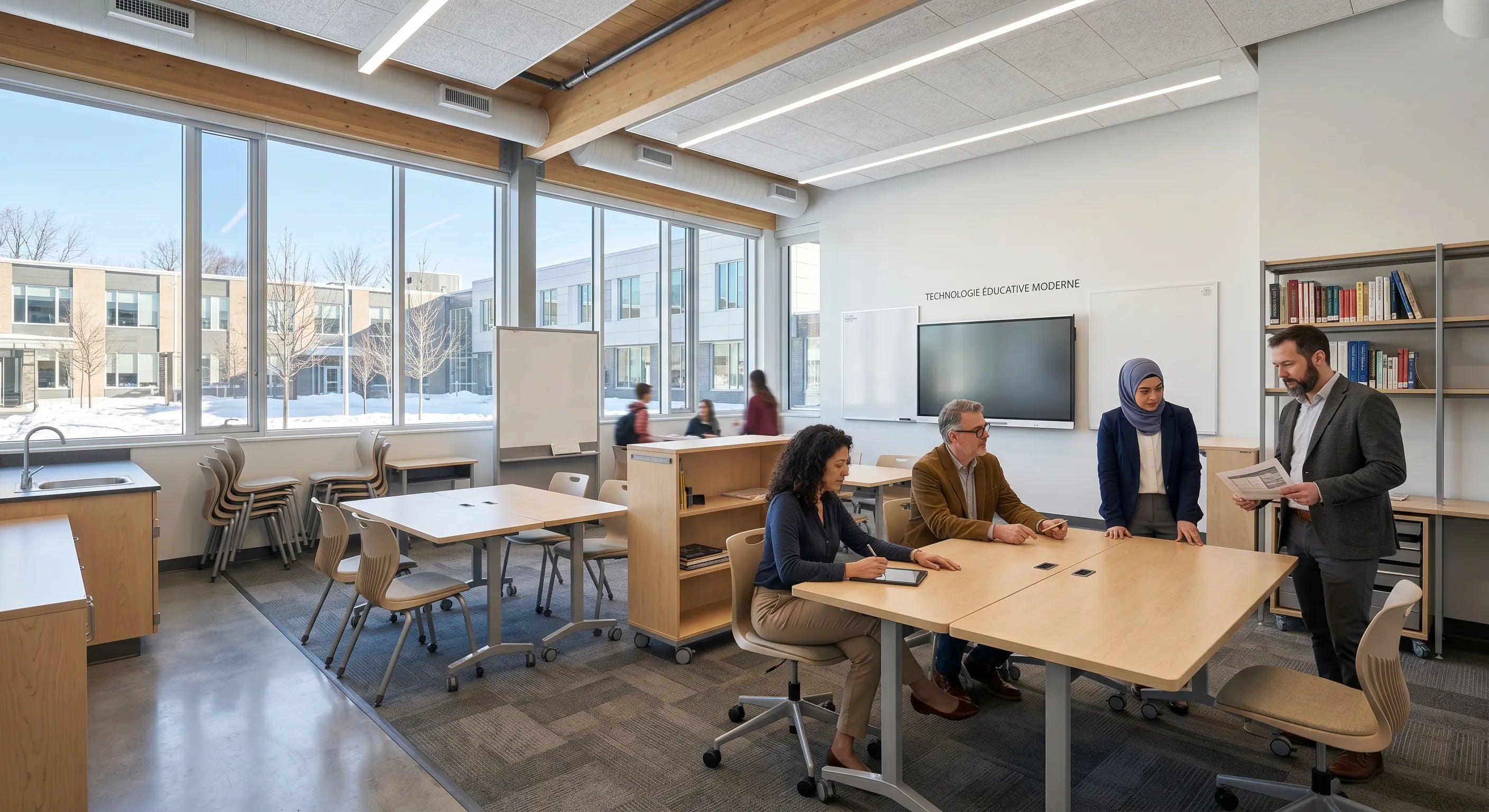
Classroom acoustics refers to how sound behaves within a learning environment. Several factors influence acoustic quality, including:
- Background noise levels
- Reverberation (echo)
- Room size and shape
- Surface materials
- Ceiling systems
- Wall treatments
- Furniture layouts
- Occupancy levels
When acoustics are poorly managed, teachers must work harder to communicate, students expend more effort listening, and important information may be misunderstood or missed entirely.
According to the Canadian Centre for Occupational Health and Safety (CCOHS), noise can interfere with speech communication and contribute to stress and reduced effectiveness in environments such as schools and offices (CCOHS, 2025).
The Science Behind Speech Intelligibility
One of the most important concepts in classroom acoustics is speech intelligibility—the ability of listeners to accurately understand spoken words.
Studies conducted by the National Research Council Canada found that classroom reverberation and background noise significantly affect speech understanding, particularly among younger children (Yang & Bradley, 2009).
This is especially important because children process speech differently than adults. Younger students require clearer listening conditions to understand lessons effectively. Even relatively small increases in noise levels or echoes can reduce comprehension and increase listening effort (Yang & Bradley, 2009).
Research from the National Research Council Canada also demonstrated that both background noise and reverberation directly influence classroom speech intelligibility and identified acoustic design targets that support better learning outcomes (Bradley, 1986).
In simple terms:
If students cannot hear clearly, learning becomes harder.
How Noise Affects Learning
Noise affects more than hearing.
The World Health Organization (WHO) identifies environmental noise as a factor associated with cognitive impairment and poorer school performance (WHO, 2024).
Research reviewed as part of the WHO Environmental Noise Guidelines found evidence linking environmental noise exposure with negative effects on cognition, attention, memory, and learning performance among children (Clark & Paunovic, 2018).
Poor acoustic conditions can impact:
- Reading comprehension
- Language development
- Attention span
- Memory retention
- Test performance
- Classroom participation
These effects are often amplified for:
- Younger students
- Students learning a second language
- Students with hearing impairments
- Students with learning challenges
Inclusion and accessibility therefore become closely connected to acoustic design.
Teachers Are Affected Too
Students are not the only occupants impacted by poor acoustics.
Teachers working in noisy environments often experience increased vocal strain, fatigue, and stress. Constantly raising one's voice to compete with background noise can contribute to long-term vocal health concerns and reduce instructional effectiveness.
Acoustic design is therefore not only a student wellness issue—it is also a workplace wellness issue.
Creating spaces that support clear communication benefits everyone who uses them.
The Rise of Collaborative Learning Spaces
Modern schools increasingly incorporate:
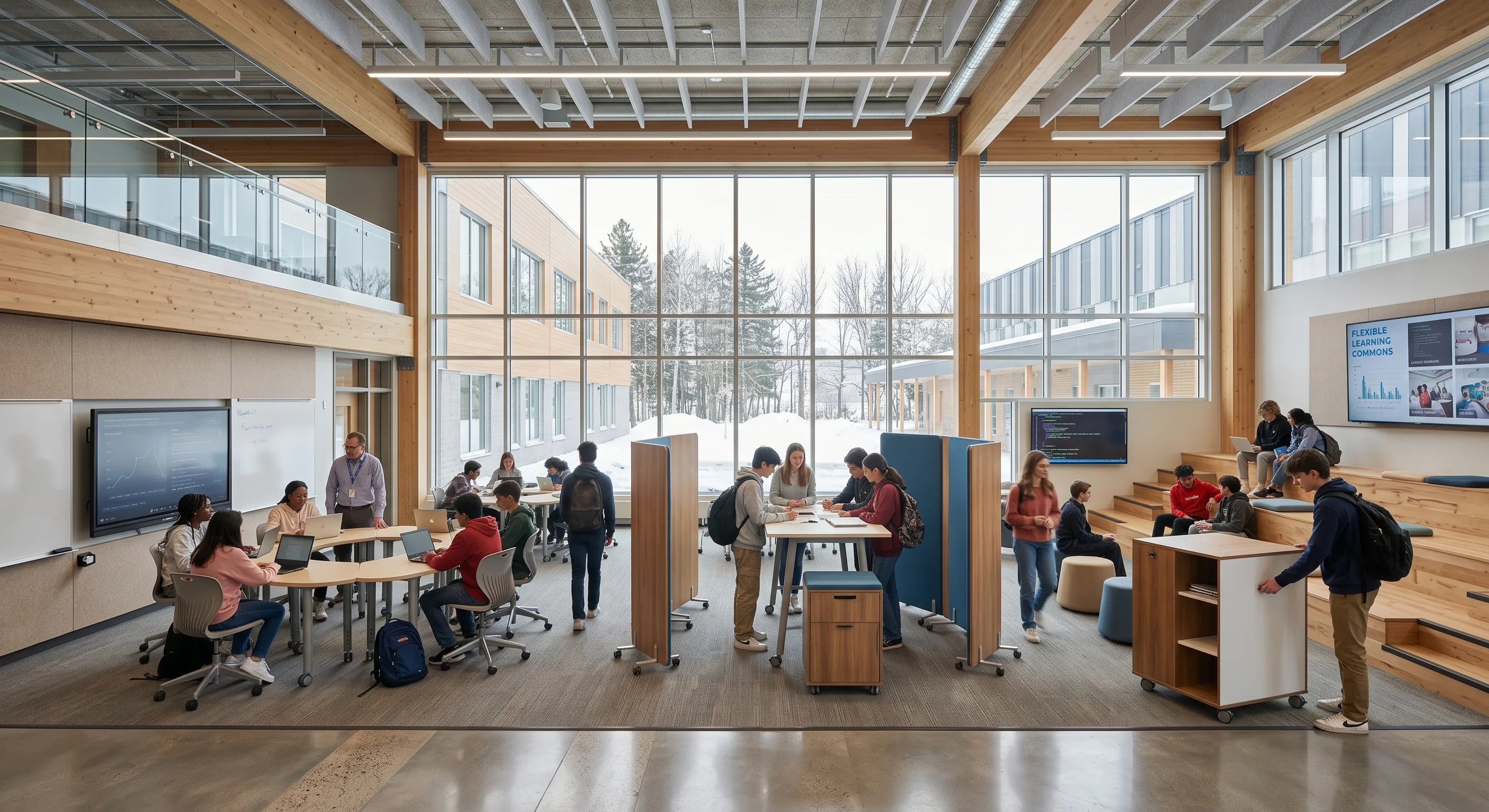
- Learning commons
- Open-concept collaboration zones
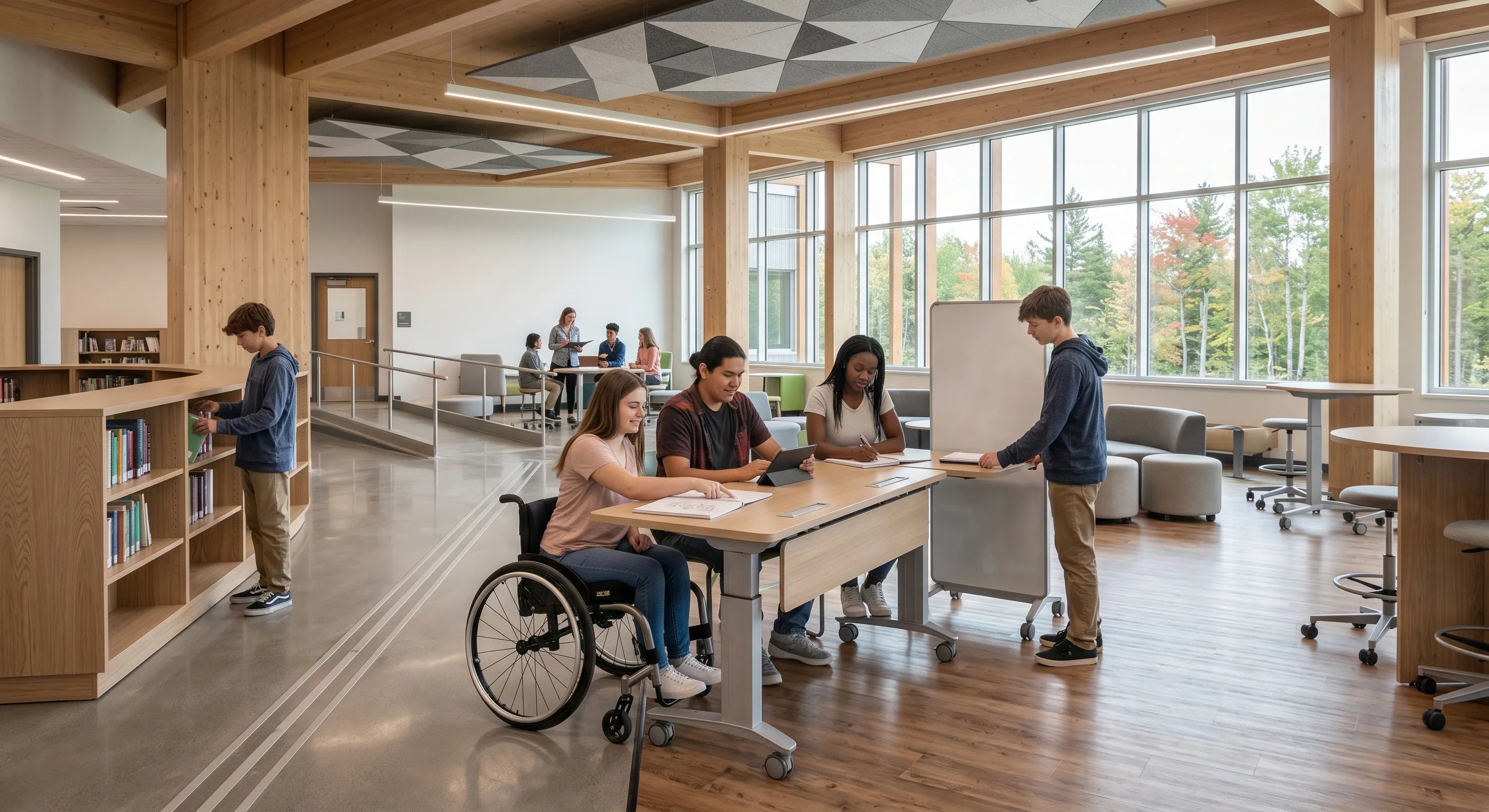
- Libraries
- Student hubs
- Flexible classrooms
- Multipurpose spaces
These environments offer tremendous educational benefits but can also introduce acoustic challenges.
Open spaces naturally allow sound to travel farther, making acoustic planning even more important.
Without proper acoustic treatments, collaborative environments can quickly become distracting and difficult to manage.
This is why architects, designers, and educational planners are increasingly integrating acoustic solutions early in the design process rather than treating them as afterthoughts.
How Schools Can Improve Acoustic Performance
Research suggests that effective classroom acoustics typically require a combination of strategies rather than a single solution.
Common approaches include:
Acoustic Wall Panels
Acoustic wall systems help absorb sound reflections and reduce reverberation, improving speech clarity.
Acoustic Ceiling Systems
Ceilings often provide one of the largest opportunities for sound absorption in educational environments.
Privacy and Divider Panels
Acoustic divider systems can help define collaborative zones while reducing noise transfer between learning areas.
Furniture and Material Selection
Soft finishes, upholstered seating, and strategic furniture layouts can contribute to better acoustic performance.
Auditorium and Theater Acoustics
Performance spaces require specialized acoustic planning to support speech intelligibility, audience experience, and multipurpose functionality.
Acoustics as Part of a Holistic Learning Environment
Increasingly, educational institutions are recognizing that acoustics should not be considered separately from furniture, flooring, architecture, lighting, and spatial planning.
The most successful learning environments approach these elements as an integrated system.
Organizations involved in educational environment design often combine furnishings, acoustic treatments, architectural products, and space planning to create spaces that support both learning outcomes and occupant well-being.
For example, acoustic panels, ceiling systems, divider solutions, and auditorium treatments can work alongside furniture layouts and interior design strategies to create more comfortable and effective educational environments.
This holistic approach aligns with the broader trend toward evidence-based educational design—where decisions are informed by research, performance, and user experience rather than aesthetics alone.
Looking Ahead
As schools continue to evolve, acoustics will play an increasingly important role in creating future-ready learning environments.
The evidence is clear:
Students learn best when they can hear clearly.
Teachers teach more effectively when communication is effortless.
And institutions benefit when educational spaces support focus, engagement, accessibility, and well-being.
Whether planning a new facility, renovating an existing campus, or upgrading specific learning spaces, acoustics should be considered a foundational component of educational design—not an optional enhancement.
Because when students can hear better, they can learn better.
In Inspera, we provide sound panels and acoustic panels that are in line and certified to be conducive in learning environments, as its functionalities and mechanisms are made specifically for that purpose.
Glossary
Acoustic Panel
A sound-absorbing panel designed to reduce echo and improve speech clarity within a space.
Reverberation
The persistence of sound after the original sound source has stopped, often perceived as echo.
Speech Intelligibility
The degree to which spoken words can be accurately understood by listeners.
Learning Commons
A flexible educational space designed to support collaboration, research, and independent learning.
Acoustic Ceiling System
A ceiling treatment engineered to absorb sound and improve room acoustics.
References
Bradley, J. S. (1986). Speech intelligibility studies in classrooms. National Research Council Canada. Retrieved from:
https://publications-cnrc.canada.ca/eng/view/object/?id=e6e90cb2-5dee-4324-9295-43309eaec147
Canadian Centre for Occupational Health and Safety (CCOHS). (2025). Noise. Retrieved from:
https://www.ccohs.ca/topics/hazards/physical/noise
Clark, C., & Paunovic, K. (2018). WHO Environmental Noise Guidelines for the European Region: A systematic review on environmental noise and cognition. International Journal of Environmental Research and Public Health, 15(2), 285. Retrieved from:
https://www.mdpi.com/1660-4601/15/2/285
World Health Organization. (2024). Guidance on environmental noise. Retrieved from:
https://www.who.int/tools/compendium-on-health-and-environment/environmental-noise
Yang, W., & Bradley, J. S. (2009). Effects of room acoustics on the intelligibility of speech in classrooms. National Research Council Canada. Retrieved from:
https://publications-cnrc.canada.ca/eng/view/object/?id=223617b1-bcd3-4df3-aa20-e044b4c43f9c
American Speech-Language-Hearing Association (ASHA). (2024). Classroom Acoustics. Retrieved from:
https://www.asha.org/practice-portal/professional-issues/classroom-acoustics/