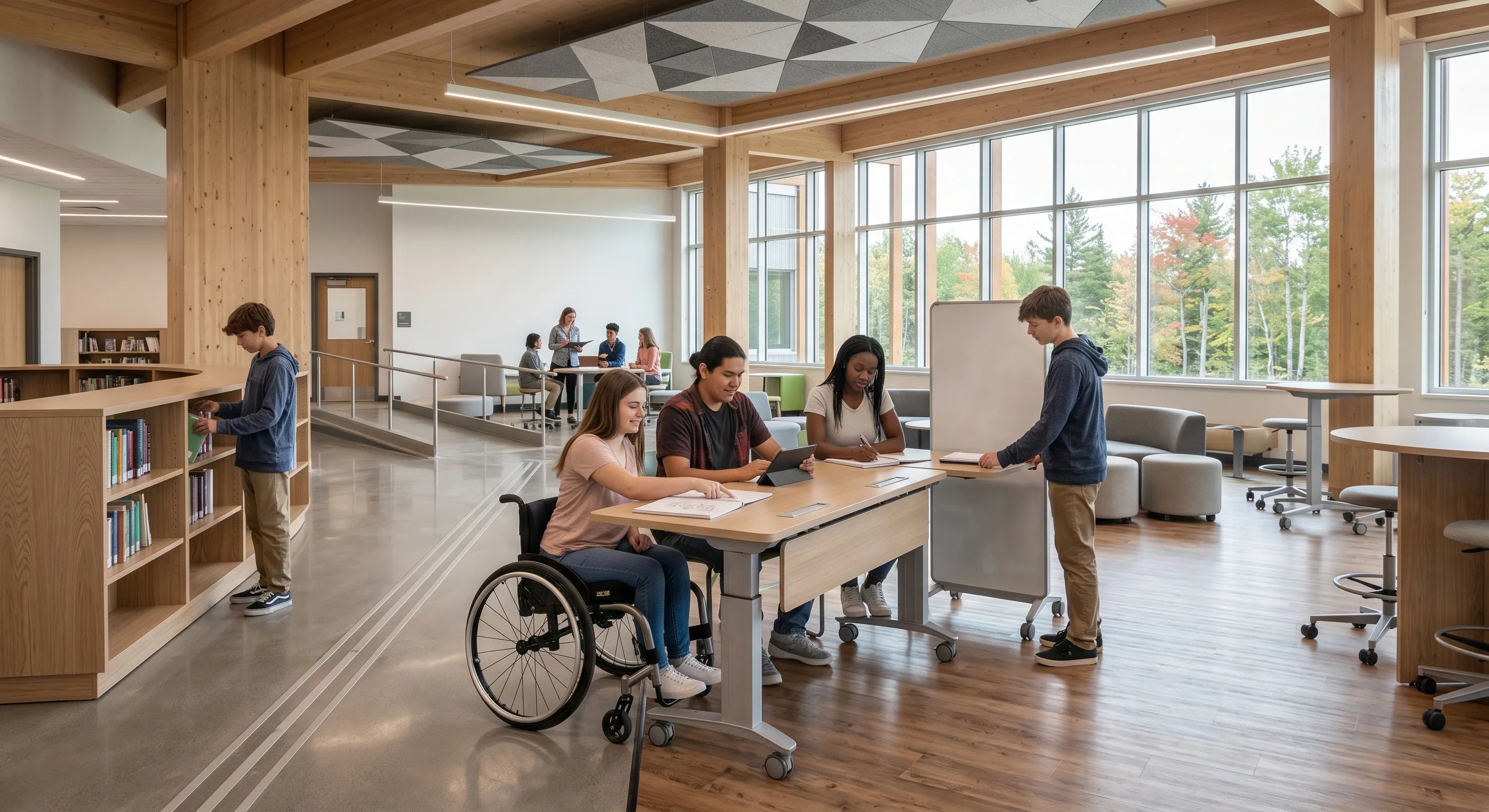
Understanding the Standards Behind Safe, Functional, and Future-Ready Learning Environments
When people hear the term "building code," they often think about structural engineering, fire protection systems, or emergency exits. While these elements are certainly important, building codes also influence many aspects of educational interiors—including classroom layouts, corridor widths, library spaces, furniture placement, accessibility, materials, acoustics, and assembly areas such as theaters and auditoriums.
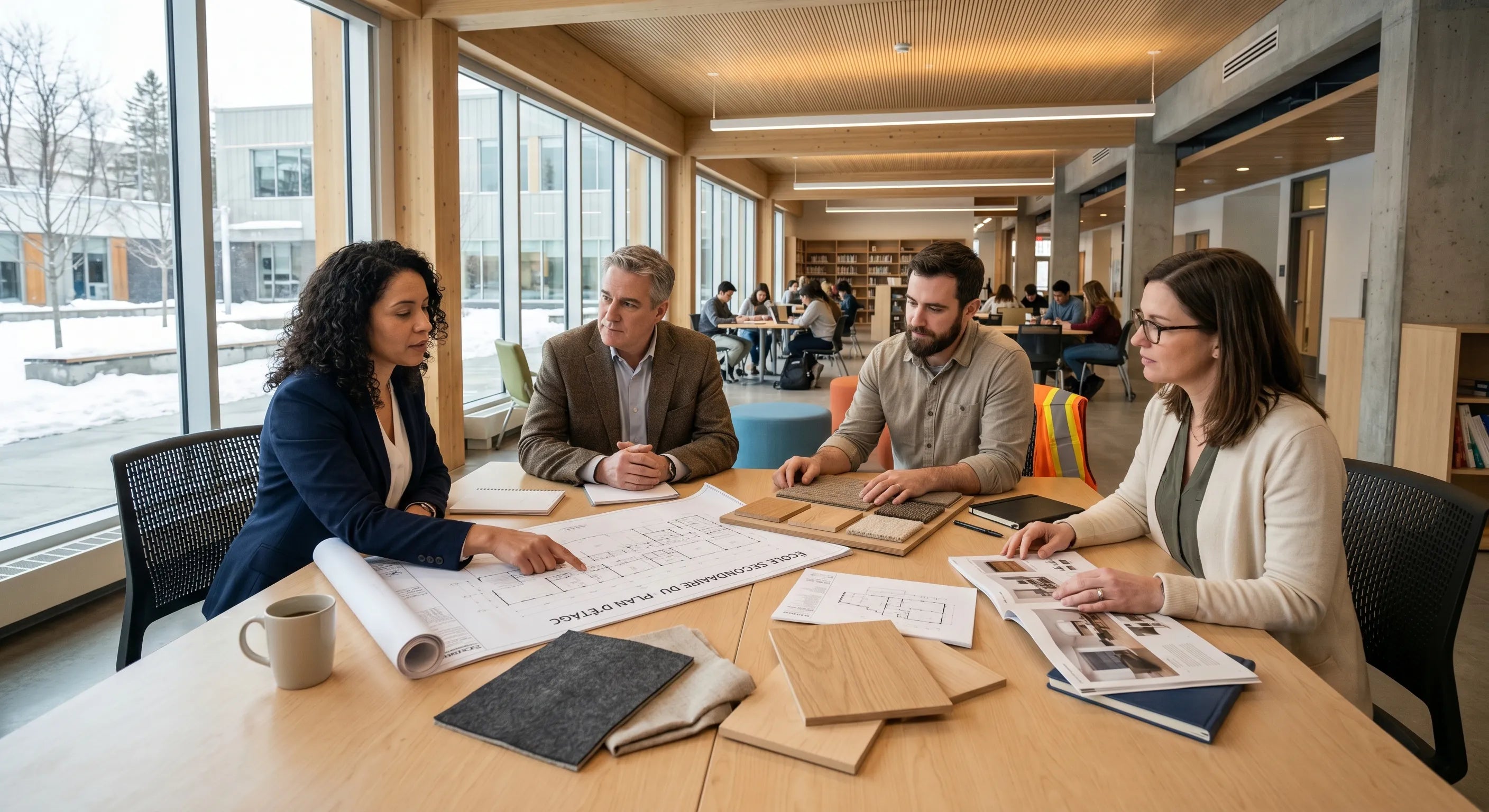
For school administrators, facility managers, architects, daycare operators, and educational planners, understanding how building regulations affect interior environments can help support safer, more functional, and more inclusive spaces.
In Canada, the primary reference document is the National Building Code of Canada (NBC), developed by the National Research Council Canada (NRC). While provinces and territories may adopt or modify code requirements, the NBC serves as the foundation for many educational facility standards across the country (National Research Council Canada [NRC], 2020).
Understanding how these requirements relate to educational interiors is increasingly important as schools evolve to support collaboration, accessibility, wellness, and modern learning practices.
What Is the National Building Code of Canada?
The National Building Code of Canada (NBC) is a model code that establishes minimum requirements for the design and construction of buildings.
The code addresses:
-
Fire safety
-
Occupant safety
-
Accessibility
-
Structural integrity
-
Health requirements
-
Energy efficiency
-
Building performance
Although educational institutions often rely on architects and engineers to ensure compliance, many decisions related to interiors can have code implications as well (NRC, 2020).
This means that furniture selection, storage systems, pathways, acoustic treatments, wall finishes, and space planning can all contribute to a building's overall compliance strategy.
Why Educational Interiors Matter
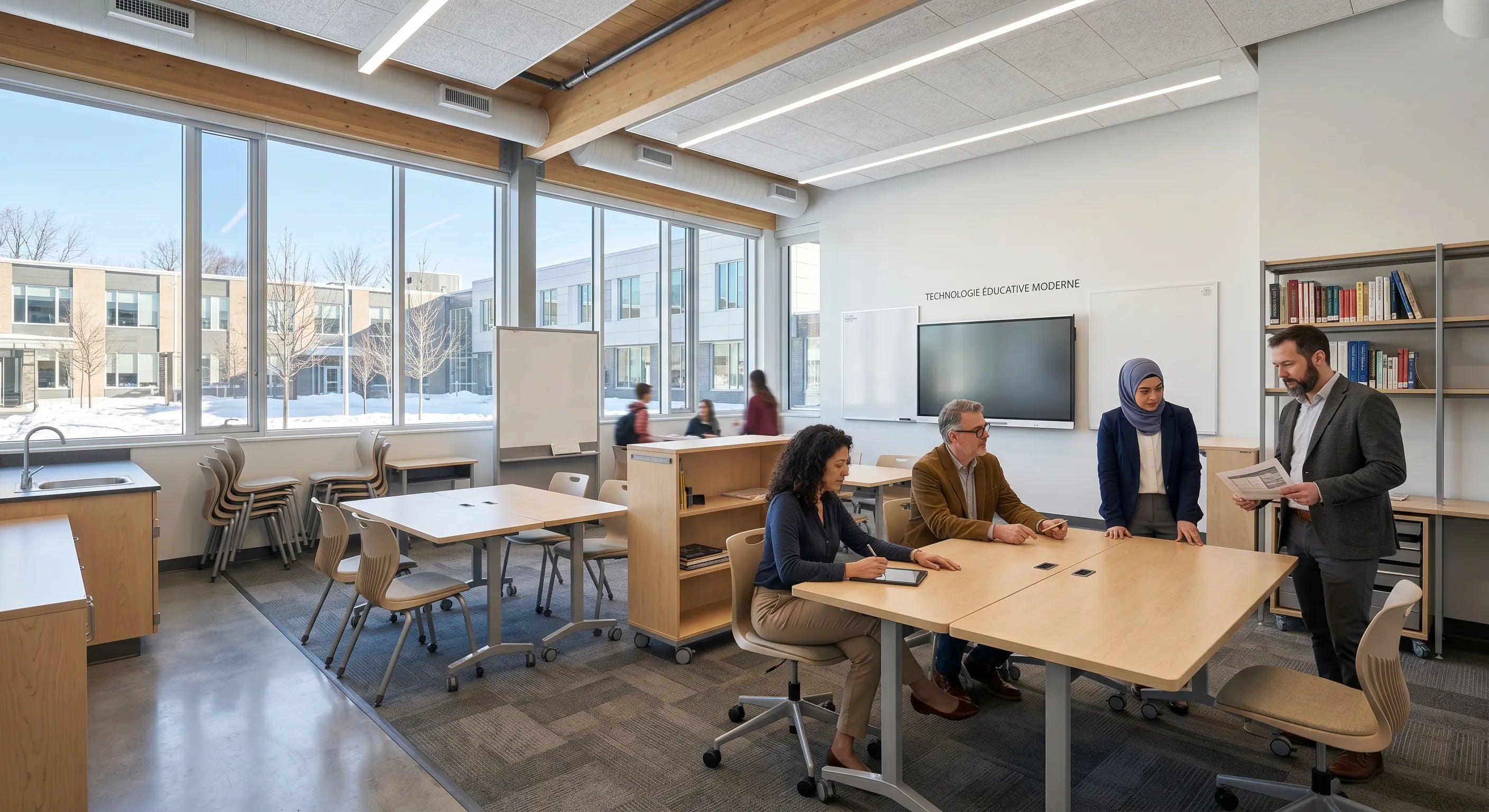
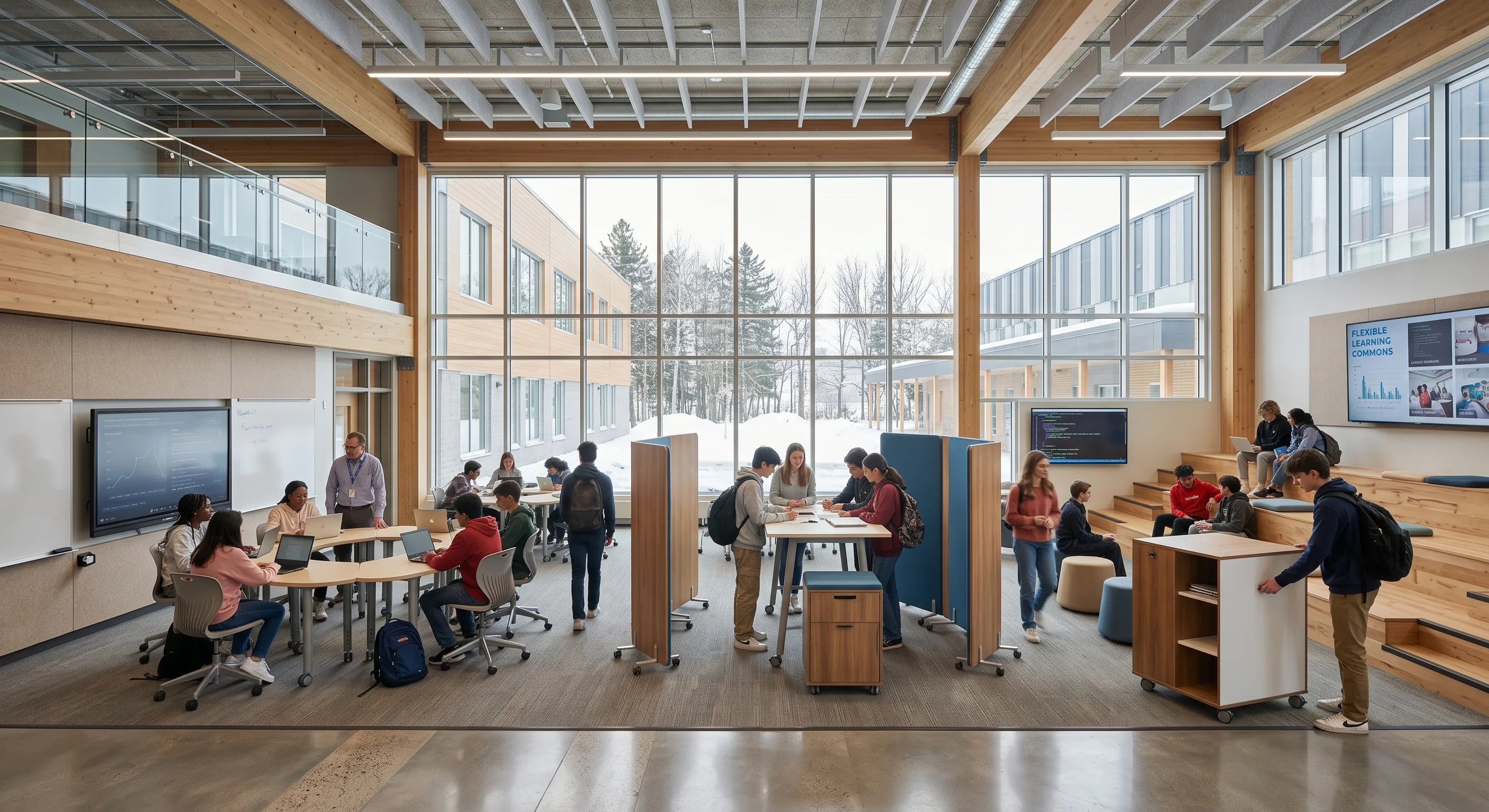
Today's learning environments are significantly different from traditional classrooms.
Modern schools often include:
-
Learning commons
-
Flexible classrooms
-
Collaboration zones
-
Libraries
-
STEM laboratories
-
Student commons
-
Performance spaces
-
Administrative offices
-
Multi-purpose gathering areas
As educational environments become more flexible and multifunctional, interior design decisions must balance creativity with safety, accessibility, and regulatory compliance.
The goal is not simply to create attractive spaces—it is to create environments that function effectively for everyone who uses them.
Pathways, Circulation, and Occupant Safety
One of the most important considerations in educational interiors is circulation.
The National Building Code establishes requirements intended to support safe movement throughout a facility, particularly during emergencies (NRC, 2020).
Interior layouts should consider:
-
Clear circulation routes
-
Unobstructed exits
-
Corridor accessibility
-
Emergency egress requirements
-
Furniture placement that does not impede movement
In educational settings, furniture, shelving systems, storage units, and collaborative workstations should be arranged in ways that maintain safe pathways while supporting day-to-day learning activities.
For libraries and learning commons, this can be particularly important as layouts evolve to accommodate both individual and collaborative learning.
Accessibility Is More Than Compliance
Accessibility has become a central consideration in educational facility planning.
The Accessible Canada Act and CSA accessibility standards promote environments that can be used by individuals with varying abilities (Government of Canada, 2019; CSA Group, 2023).
Educational interiors should consider:
-
Accessible routes
-
Appropriate turning clearances
-
Reach ranges for storage systems
-
Accessible service counters
-
Furniture flexibility
-
Inclusive learning environments
Libraries, classrooms, and collaborative spaces increasingly benefit from adaptable furniture and layouts that can support a wide range of users.
Accessibility should not be viewed as a design constraint. Instead, it is a key component of creating welcoming and effective educational environments.
Material Selection and Interior Finishes
Educational facilities experience significant daily wear and tear.
As a result, material selection plays an important role in both performance and compliance.
Building codes often reference requirements related to:
-
Flame spread ratings
-
Smoke development characteristics
-
Interior finish performance
-
Fire resistance requirements
These considerations may influence the selection of:
-
Wall panels
-
Acoustic treatments
-
Flooring systems
-
Millwork
-
Cabinetry
-
Furniture components
For educational institutions, selecting durable and compliant materials can contribute to both safety and long-term operational value.
Acoustics and Learning Environments
While building codes primarily establish minimum safety requirements, educational research increasingly highlights the importance of acoustics in supporting learning outcomes.
The National Research Council Canada has published research demonstrating that background noise and reverberation can significantly impact speech intelligibility within classrooms (Yang & Bradley, 2009).
Poor acoustics may affect:
-
Student concentration
-
Listening comprehension
-
Language development
-
Teacher communication effectiveness
As a result, many educational projects incorporate:
-
Acoustic wall panels
-
Acoustic ceiling systems
-
Privacy panels
-
Sound-absorbing dividers
-
Specialized auditorium treatments
These elements can help create learning environments that support clearer communication and improved user experience.
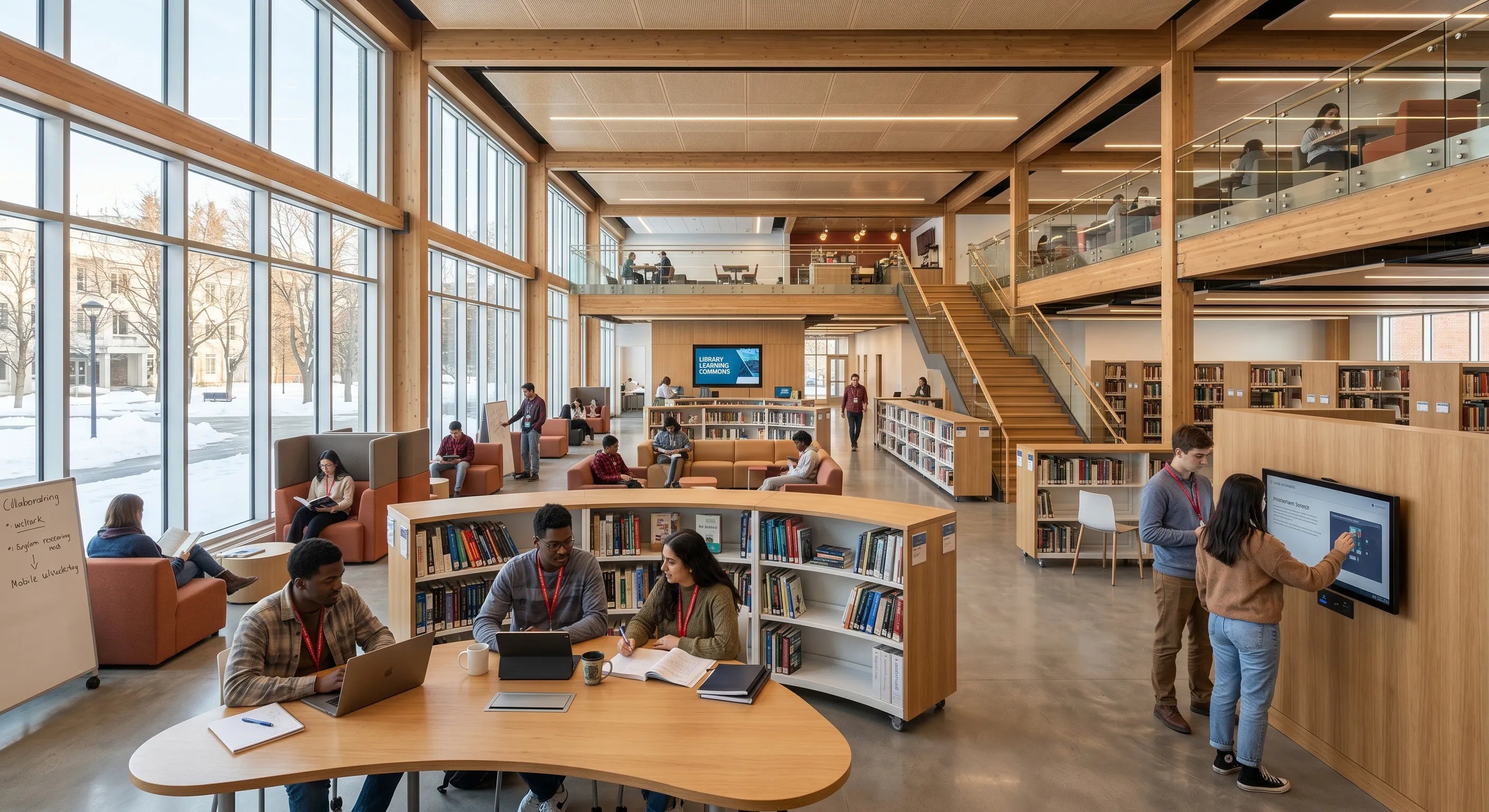
Libraries and Learning Commons
Libraries have evolved considerably over the past two decades.
Many schools now view libraries as dynamic learning hubs that support:
-
Research
-
Collaboration
-
Technology integration
-
Group learning
-
Independent study
This shift requires careful consideration of:
-
Shelving placement
-
Occupant circulation
-
Acoustics
-
Accessibility
-
Flexible furniture systems
Modern educational interiors often seek to balance openness with organization, creating spaces that encourage both collaboration and focus.
Theater and Assembly Spaces
Educational facilities frequently include assembly spaces such as:
-
Auditoriums
-
Performance venues
-
Lecture halls
-
Multipurpose gathering areas
These spaces often involve additional considerations related to:
-
Occupant load
-
Egress requirements
-
Accessibility
-
Acoustics
-
Seating configurations
Proper planning can help support both safety and functionality while enhancing the overall experience for students, educators, and visitors.
Furniture Is Part of the Building Environment
Furniture is sometimes treated as a separate procurement category, but in practice it functions as part of the built environment.
Desks, tables, storage systems, cabinetry, acoustic dividers, and shelving all influence how people move, collaborate, learn, and interact within a space.
For this reason, educational institutions increasingly approach furniture selection as part of a broader environmental design strategy.
Organizations involved in educational interiors often consider how furnishings interact with:
-
Building circulation
-
Accessibility requirements
-
Acoustics
-
Durability expectations
-
User experience
This integrated perspective can help create spaces that perform effectively over the long term.
As educational environments continue to evolve, companies such as INSPERA contribute to these conversations by supporting schools, institutions, and facility planners with furniture systems, acoustic solutions, cabinetry, shelving, panel systems, and integrated interior environments designed for educational settings.
Building Beyond Minimum Requirements
It is important to remember that building codes establish minimum requirements—not necessarily optimal learning conditions.
Forward-thinking educational institutions increasingly go beyond compliance by considering:
-
Student wellness
-
Inclusive design
-
Acoustic performance
-
Flexibility
-
Collaboration
-
Long-term durability
The most successful educational spaces combine regulatory compliance with thoughtful environmental design.
When safety, accessibility, functionality, and inspiration work together, educational facilities become more than buildings—they become environments that support learning, growth, and community.
Looking Ahead
Educational environments continue to evolve alongside teaching methods, technology, and community expectations.
While the National Building Code provides an essential foundation, creating successful educational interiors requires a broader understanding of how people learn, interact, and thrive within a space.
Whether planning a classroom, library, learning commons, auditorium, or administrative office, the most effective environments balance code compliance with thoughtful design, ensuring that educational spaces remain safe, accessible, functional, and inspiring for generations to come.
Glossary
National Building Code of Canada (NBC)
Canada's model building code that establishes minimum requirements for safety, health, accessibility, and building performance.
Egress
A means of exiting a building safely during normal use or emergencies.
Occupant Load
The maximum number of people permitted to occupy a space based on building code calculations.
Learning Commons
A flexible educational environment that supports collaboration, research, and independent learning.
Speech Intelligibility
The ability to accurately understand spoken communication within a space.
Flame Spread Rating
A measurement used to evaluate how quickly fire may spread across a material's surface.
Accessible Route
A pathway designed to accommodate individuals with varying mobility and accessibility needs.
References
Canadian Standards Association (CSA Group). (2023). CSA B651: Accessible design for the built environment. Retrieved from:
https://www.csagroup.org
Government of Canada. (2019). Accessible Canada Act. Retrieved from:
https://laws-lois.justice.gc.ca/eng/acts/A-0.6
National Research Council Canada. (2020). National Building Code of Canada 2020. Retrieved from:
https://nrc.canada.ca/en/certifications-evaluations-standards/codes-canada/publications-codes-canada/national-building-code-canada-2020
National Research Council Canada. (2024). Codes Canada. Retrieved from:
https://nrc.canada.ca/en/certifications-evaluations-standards/codes-canada
Yang, W., & Bradley, J. S. (2009). Effects of room acoustics on the intelligibility of speech in classrooms. National Research Council Canada. Retrieved from:
https://publications-cnrc.canada.ca/eng/view/object/?id=223617b1-bcd3-4df3-aa20-e044b4c43f9c
Government of Canada. (2024). Accessibility Standards Canada. Retrieved from:
https://accessible.canada.ca
National Research Council Canada. (2024). Codes Canada Resource Centre. Retrieved from:
https://codes-guides.nrc-cnrc.gc.ca